
Which Chinese tea is the healthiest?

- 04 September 2025pmEurope/KievThu, 04 Sep 2025 12:04:00 +03002025pThursdaypm25
- Views: 1636
Which Chinese tea is the healthiest?
Or how not to go crazy in an ocean of leaves promising eternal youth.We have all asked ourselves at least once the global question: Which Chinese tea is the healthiest? With the same level of seriousness as "is there life on Mars?" or "why are cats so indifferent to our love?" After all, tea is not just a drink. It is a lifestyle, a philosophy, an inspiration and an excuse to take a break between things (or instead of doing things at all).
And so you go to a website or a tea shop, and there: green, white, yellow, oolong, red, raw pu-erh, ripe pu-erh... And all are healthy! All are unique! All have miraculous properties! And you are already in a panic, like a person who opened the menu in a Chinese restaurant for the first time.
Well, let's put the teapots on the shelves and finally find out which Chinese tea is really the healthiest - if such a thing even exists.
Exploring the Types of Chinese Tea
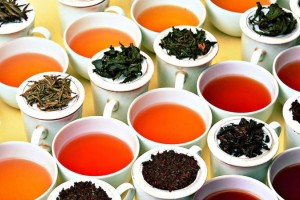
The Chinese have divided tea into six main categories. Not because they had nothing better to do, but because they are serious about it.1. Green tea (Lu Cha)
This is the one that people with weak stomachs are afraid of and all fitness gurus adore. Tea with minimal fermentation, extremely fresh and rich in nutrients. It is especially loved by fans of healthy eating who are not yet tired of quinoa.
2. White tea (Bai Cha)
The most delicate of all. The processing is minimal, the naturalness is maximum. It is like a "clean sheet" in the world of tea. Collected, withered, dried and ready. The taste is subtle, the aroma is delicate, the effect is soft. It is chosen by those who want something "special, but without excesses." The most valuable is considered to contain the maximum number of tea buds - for example, Silver Needles.
3. Yellow tea (Huang Cha)
A rare guest on the market, because the production is complex and long, like Monday. It has a delicate aroma, deeper than green, but softer than oolong. For gourmets and tea aesthetes.
4. Oolong (Qin Cha)
The golden mean. Partially fermented, with many variations: from light, almost green (spring To Guan Yin) to deep, almost red (Da Hong Pao). Everyone drinks it - from office workers to monks. If you don't know where to start - take oolong.
5. Red tea (Hong Cha)
Not to be confused with what we consider "black". Although there are varieties that are as close as possible to our usual, "European" taste, for example, Keemun. In China, it is red, and it is sweetish, soft, aromatic. Ideal for the morning or for those who have finally decided to switch from coffee.
6. Puer — shu and sheng
Shu is mature, dark, rich. You drink it and feel like a general cleaning is starting in your body.
Shen is young, wild, energetic. It’s like a rock concert in a cup. Not everyone will understand it from the first sip, but they draw it in strongly.
7. GABA tea
GABA (gamma-aminobutyric acid) is a neurotransmitter that removes excess background noise in the head and helps you focus. In this line, you can also choose the one that suits your taste – Green Alishan, for example, is very similar to green tea, but much softer.
Let’s compare their advantages
Green tea:Contains the maximum amount of catechins – the same antioxidants that promise you eternal youth and glowing skin. It also slightly stimulates the appetite. But! It can irritate the stomach, especially if you drink it on an empty stomach. And the heart can dance a jig if you overdo it.
White tea:
A gentle protector of your beauty. It has an anti-aging effect, reduces inflammation, and gently removes toxins. Ideal for introverts and those who want something light, like a breeze over a field of peonies.
Yellow tea:
A quiet hero. It helps digestion, strengthens the spleen (and you need it, don't argue), and has a balance between the benefits of green and the tenderness of white. But it's expensive. At least more expensive than pizza.
Oolong tea:
A universal soldier. It reduces weight (but without a guarantee), regulates blood sugar levels, and helps digest tasty but not very healthy dishes. It also lifts your spirits, like a good meme.
Red tea:
Stimulates blood circulation, warms in the cold, and is suitable for children, grandmothers, and people with low blood pressure. It reduces fatigue and invigorates. If your motto is "morning without tragedies," then here's your option.
Shu puer:
Ideal after holidays, feasts and life crises. Removes toxins, improves metabolism, normalizes microflora. It is respected even by those who usually do not drink tea.
Sheng puer:
For the brave. Has a strong stimulating effect, tones, disperses thoughts and pressure. If you are tired of coffee, sheng can become a new love.
GABA tea:
Gives calm concentration, a clear head, a feeling of "I am in the resource". It is very helpful in moments when you need to pull yourself together, but not be nervous, for example, preparing for an exam, an interview, a deadline, an important meeting.
Debunking myths
Myth 1: One tea is the most useful for everyoneThis is like saying that one size fits all. No. Everyone has their own body: some need to warm up (puer), and some need to cool down (white). Some need inspiration (sheng), and some need stability (shu).
Myth 2: Expensive means the best
Yes, old sheng puer for $1000 is elite. But inexpensive green tea from theAnhui Province may be great for you. Price is not always an indicator of benefit.
Myth 3: Tea cures everything
Tea is not a panacea. It is support, satisfaction, prevention. But if you have a temperature of 39 and are looking for salvation in tea, it is better to go to the doctor.
Interesting facts for gourmets and skeptics
In China, tea is stored in bamboo stems, clay balls, and sometimes in coconut shells. Because just a jar is boring.
There is pu-erh, aged in caves for more than 50 years. This is not wine.
Yellow tea was drunk by the emperors of the Ming Dynasty. And only emperors could afford it. And you can without bloodshed and upheavals.
White peony is one of the most delicate white teas - it has a flower in its name, but there are no flowers. No deception, just poetry.
Chinese medicine divides people by types: by "fire", "water", "inner cold", activity, etc.
To simplify, let's say in human terms: by temperament and condition.
If you are a choleric with sparkling eyes, you do not need green tea. It will "blow you up". White or oolong are better - they are softer.
If you are a phlegmatic and have lived with 90/60 for half your life, then green is your ally. It will increase your blood pressure and clear your brain.
If you are an anxious melancholic, and everything is always "wrong" for you, GABA will help you - but not because it "calms", but because it gathers you together.
Conclusion: Which tea is the healthiest?
The correct answer: the one that suits you today.If you are freezing - choose shu pu-erh. If the sun is burning - white or green. If you want to relax - oolong. You need to gather your strength – sheng.
There is no one “best” – there is yours. Unique, for your mood, season and body.
Taste, try, combine. Because tea is not a competition. It is an incident.
Enjoy your tea parties with i-tea.club!
We all heard and read a lot about the benefits of tea. Still, among such a variety of tea, represen..

Red - will say some. It warms, pacifies, relaxes, gives a feeling of comfort and coziness, creates a..
Recommended

Lishan - joy from Pear Mountain, a high-mountain source of enjoying taste and aroma! Li Shan Oolong is grown at an altitude of ..
295 грн.

Ulun Mountain of Joy fully justifies the name, fills with inspiration and happiness! Synonyms: Oolong from the mountains of He ..
385 грн.

The younger brother, Da Hong Pao, who has a very similar taste, aroma and properties, will also be pleasantly surprised by the cos..
100 грн.

Shen Puer Mengku Mu Ye Chun Early spring is an energetic start to your day! Effect: invigorates, energizes, concentrates on set..
409 грн.

Synonyms: Turquoise Gaba Tea, Gaba Oolong, Red Gaba Tea, Gabaron Tea Turquoise Alishan is the king in the GABA line. Effect: Tu..
450 грн.

Kimun is a strong, black, intoxicating, fragrant breath of inspiration from fatigue and depression with a soft "smoke". Synonym..
215 грн.

Warming and hugging evening tea with honey notes of dried fruit for lovers of classic black. Synonyms: Red Yunnan tea, Dian Hon..
141 грн.

Dian Hong - your inspiration and harmony with the heady aroma and rich taste! Dian Hung is autumn! Dian Hoon is a red tea that ..
163 грн.

Golden Brow - delicately curled tea leaf and golden bud. This tea is not only beautiful, it is incredibly tasty and fragrant! ..
138 грн.

Happy Raja - the taste and emotions of childhood! Indian black tea, which returns to childhood not only the taste and aroma, bu..
150 грн.

Assam is the strongest of all Indian teas. About half of the tea produced in India is grown in the Indian state of Assam. The t..
270 грн.

Ceylon black tea - the usual taste and aroma from childhood! Tea grown on the tea island itself. Sri Lanka (Ceylon) is recogniz..
210 грн.

Xiao Zhong - warm embrace of an old friend, coziness and comfort in every mouthful. Effect: warms, improves mood and well-being..
165 грн.