
Tea and mood


- 01 July 2025pmEurope/KievTue, 01 Jul 2025 12:04:59 +03002025pTuesdaypm25
- Views: 1206

Tea and mood: how to brew peace, inspiration or fortitude
We all have days when our internal climate is more capricious than the April weather. Sometimes it’s sunny, sometimes it’s hail, sometimes it’s an incomprehensible melancholy. We wake up in one state, at breakfast in another, and by lunchtime we fall into an existential stupor. Mood is a delicate thing. But it, like tea, can be brewed. Not literally, of course. Although…
Tea is not magic. But it’s very close. Especially if it’s not just a drink from a bag, but live Chinese tea: pu-erh, oolong, white, green or red. Each of them has a character, its own “I”, its own energy. One returns you to the body, another opens your breath, the third says: “Quiet. Everything is fine.” And it is this unnoticeable, soft support that makes tea not just a drink, but a tool for taking care of yourself.
Let’s be honest: the world will not become easier from a cup of tea. But you can do it. And that's something. Especially since tea is one of the few drinks that has been used for centuries not only to quench thirst, but also as a way to tune in, gather, and recover. In Chinese culture, tea is not drunk just like that - it is brewed with intent, consciously, understanding that each variety is a small journey into oneself.
And let this journey begin with a simple action - pouring water over the leaves. But at this moment, you are pouring not only tea, you are pouring attention into yourself. The tea moment is an anchor, an assembly point, an opportunity to sit down, breathe and stop running for at least a minute.
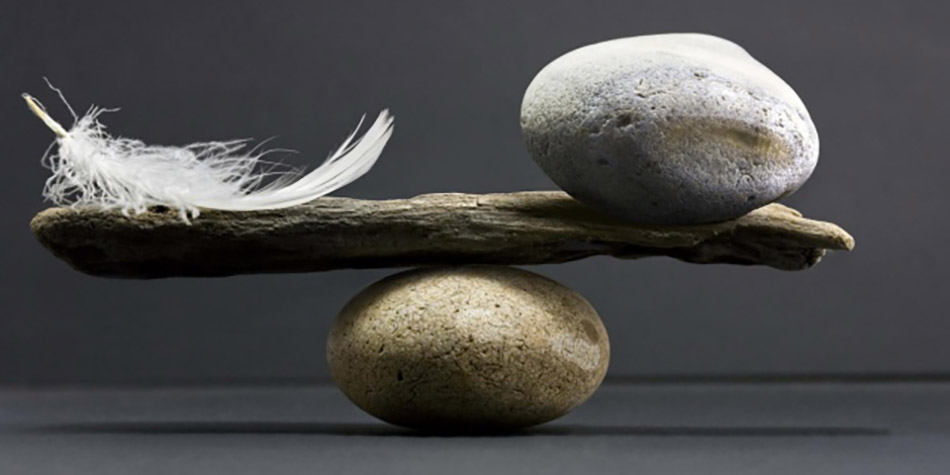
When the world is falling apart - brew pu-erh
If you feel like a rag soaked in anxiety and fatigue, if your head is buzzing, and your hands do not obey - this is pu-erh time. Shu pu-erh is warm, thick, enveloping. As if someone covered you with a heavy woolen blanket and said: "Lie down. You have the right to do so."
Sheng puer is a different story. It invigorates. It doesn't shock you like coffee, but rather takes you by the shoulders and says, "Well, shall we go?" The light astringency, the freshness of the leaf, the moisture of the earth - all this does not fuss, but gives clarity. It does not excite, but clarifies.
In Yunnan, the birthplace of puer, there is a tradition of brewing it before an important conversation. Because it structures thoughts and gives the opportunity not to react, but to act consciously. Puer is wisdom that can be drunk. It helps not to run away from yourself, but to meet yourself - honestly, without unnecessary noise.
Interesting fact: in ancient China, puer was transported in the form of pressed cakes, and was often used as currency. It was worth its weight in gold - literally. Today, old-aged puer is still expensive, and not only because of its rarity, but also for the depth of state that it can give.
When everything is bland — oolong
Sometimes the day is neither bad nor good. Just nothing. The taste for life seems to have dulled, the colors have faded, even thoughts are sluggish. That's when oolong comes in.
They come in different varieties: dark (like Da Hong Pao — rich, with smoke and wood), light (like Tie Guan Yin — floral, with orchid tones), milky (like Jin Xuan — creamy and delicate). But the essence is the same — they bring back nuances. Subtle edges. And with them — emotional sensitivity.
A sip of oolong — and you start to notice: birds singing, the sun in the window, a cat yawning funny. It seems that life is not so boring. Oolong is like turning on an HDR filter for life, making colors a little brighter, smells deeper, and feelings — closer.
In traditional Chinese medicine, oolong was considered a tea "bridge" between Yin and Yang - balance, harmony. Not too invigorating, not too relaxing. Just keeps you in the here and now. This is a tea of inspiration that does not require feats - it just makes the day tastier.
By the way, oolong is one of the most difficult teas to produce. It needs to be withered, cooled, fermented and roasted. Masters spend years learning how to make good oolong. And it seems that this care remains in each leaf.
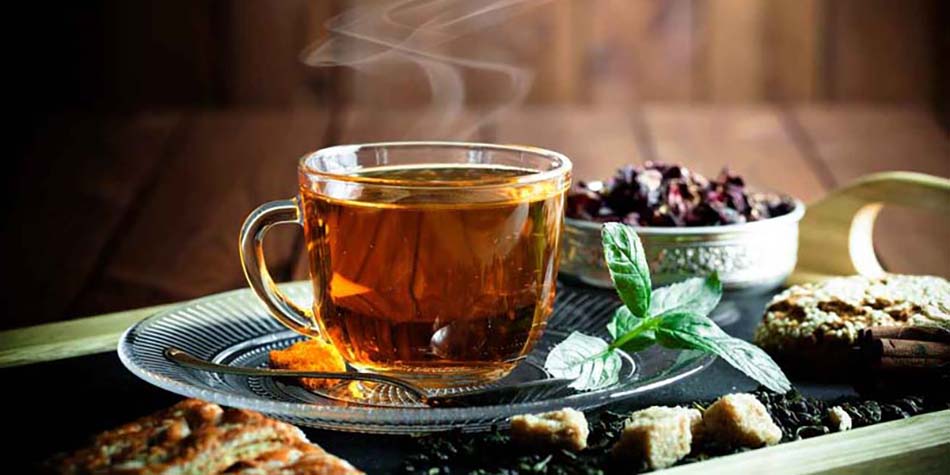
When everything irritates you - red tea
Have you ever had this: everything seems to be according to plan, but inside there is a storm? Anger, irritation, rage, you can scream into your pillow? Red tea works best here. In China it is red, here it is "black", but that is not the point.
Dian Hong from Yunnan is soft, honeyed, slightly tart. It does not extinguish the fire, but it transforms it from an uncontrollable conflagration into a steady flame. It makes it easier to exhale, stop screaming internally and say: “Yes, it is annoying. But I can handle it.”
Qimen is stricter. It structures. It makes it so that irritation does not “flow”, but gathers in the palm. And it becomes strength. This tea is not for running away from emotions, but for taming the storms inside.
Historically, red tea in China was drunk by rulers before public speeches. Because it does not give fuss, but confidence. Not aggression, but direction. It is about internal support. About adult firmness.
When you are anxious - flower tea
It happens that everything is disturbing. Even the air seems too harsh, and the noise outside the window is too loud. Here, teas with flowers and herbs come to the rescue: anchan (blue tea), jasmine green, lavender tea.
Anchan from Thai clitoria colors the water blue or purple. It relaxes the eye, and it is also full of antioxidants. Lavender is generally a smallaromatherapy session. And jasmine green adds a light dreaminess, as if you were a child again, hiding under a blanket with a flashlight.
Flower teas are soft, safe, like a caring grandmother covering you with a blanket and fussily offering you a pie. They do not cure anxiety - but hug.
It is interesting that anchan in Southeast Asia is often drunk at night - because of its ability to reduce cortisol levels and improve sleep quality.

When it is quiet and warm - white tea
Not every day is a storm. Sometimes it is just calm. And this needs to be preserved. Concentrated, not spilled. White tea helps here.
Bai Hao Yin Zhen - light, from silvery buds. The taste is like a drop of dew in the morning. Very subtle. Almost imperceptible. But after it there is a feeling of purity.
Bai Mu Dan - a little richer, but also not intrusive. It is good to drink it in those moments when you do not want to talk or think. Just be. With yourself. Without haste.
Poets love white tea. It is called "pause tea". Because in this fragile, barely perceptible silence you can truly hear yourself. Not above your thoughts, but deeper. This tea is not for action, but for awareness.
When you are switched off - green tea
There is a state when you do not seem to suffer, but do not live either. Just exist. Emotions are dulled, motivation is zero, even the body seems sluggish. This is where green tea comes in.
Longjing, Mao Feng, Bi Luo Chun - they are all about freshness. About "come on, wake up." They have a lot of amino acids, especially L-theanine, which helps you concentrate without straining.
Green tea is about returning to the body. It does not force you to do anything, but fills you with the feeling: "I am." And from this you can already start. At least with cleaning. At least with a smile. This is the beginning, a gentle kick, but without stress.
It is interesting that the combination of caffeine and L-theanine present in green tea improves cognitive functions gently and steadily, unlike the sharp rise and fall after coffee.
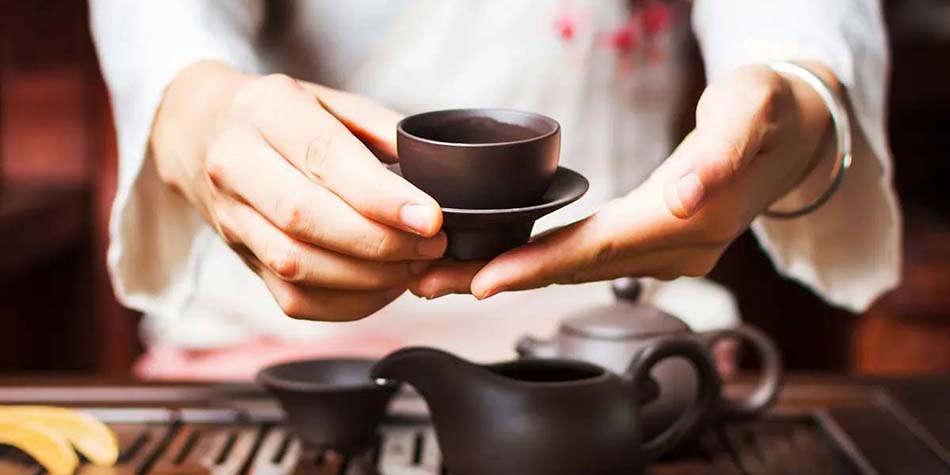
A short history of gongfu-cha
The gongfu-cha tea ceremony was born in China as a way to brew tea “with skill”, with attention to detail. A small gaiwan, several infusions, minimalism of movements. The essence is not in beauty, but in presence. You do not just brew tea - you enter into a dialogue with it.
Rinse the leaf, inhale the aroma, make the first infusion - and wait. The taste increases gradually, as does the mood. One infusion - invigorates. Another - relaxes. The third - suddenly makes you happy for no reason. This is the magic of gongfu-cha.
During gongfu cha, not only the flavors are revealed, but also you. Leaf after leaf, sip after sip, as if one of the masks is removed with each infusion. Only you and tea remain. Simple things. The most important.
Tea is not magic. But almost.
You pour a dry leaf into a gaiwan. Watch it unfold in the water. Feel the aroma. Try the first infusion. And something inside thaws.
The whole power of tea is in slowing down. It does not give decisions, does not hit you on the cheek. It just sits next to you. And in this silence you begin to hear yourself. And sometimes - even understand. Not with your mind, but a little deeper.
Tea is a form of presence. A way to tell yourself: "I am important." It is an antidote to overload, to "must", to haste. It is what brings you back to yourself, without judgments and plans.
Sometimes this is the simplest and most effective way to regain your footing. Without loud promises, just cup after cup, breath after breath.
Conclusion
Pu-erh is for roots. Oolong is for nuances. Red is for self-control. Floral is for calm. White is for balance. Green is for inclusion.
Tea is not just water with leaves. It is an opportunity to slow down, listen and even out your mood. It is an invitation to a date with yourself - without drama, but with respect.
If you feel that you want to choose a tea for your current “I”, we will help. The taste will be found. The mood will be improved. And a good brew will solve more than it seems.
Enjoy your tea parties with i-tea.club!
Recommended

White Peony - gentle and cheerful morning for you! Synonyms: Baymudan, Bai Mu Dan. Effect: gently tones, inspires, harmo..
543 грн.

Bi Luo Chun - the triumph of spring energy. Bi Luo Chun is translated as "Emerald spirals of spring." Green tea, twisted by sma..
215 грн.

Da Hong Pao - the legendary Chinese Oolong tea, gathered in the mountains of Wuyi, is one of the top most expensive teas in the wo..
379 грн.

Alishan Oolong - happiness in every throat! Taiwan's business card, the best among Taiwanese oolongs. Presented to official gue..
294 грн.

Synonyms: Turquoise Gaba Tea, Gaba Oolong, Red Gaba Tea, Gabaron Tea Turquoise Alishan is the king in the GABA line. Effect: Tu..
450 грн.

Kimun is a strong, black, intoxicating, fragrant breath of inspiration from fatigue and depression with a soft "smoke". Synonym..
215 грн.

Warming and hugging evening tea with honey notes of dried fruit for lovers of classic black. Synonyms: Red Yunnan tea, Dian Hon..
141 грн.

Dian Hong - your inspiration and harmony with the heady aroma and rich taste! Dian Hung is autumn! Dian Hoon is a red tea that ..
163 грн.

Golden Brow - delicately curled tea leaf and golden bud. This tea is not only beautiful, it is incredibly tasty and fragrant! ..
138 грн.

Happy Raja - the taste and emotions of childhood! Indian black tea, which returns to childhood not only the taste and aroma, bu..
150 грн.

Assam is the strongest of all Indian teas. About half of the tea produced in India is grown in the Indian state of Assam. The t..
270 грн.

Ceylon black tea - the usual taste and aroma from childhood! Tea grown on the tea island itself. Sri Lanka (Ceylon) is recogniz..
210 грн.

Xiao Zhong - warm embrace of an old friend, coziness and comfort in every mouthful. Effect: warms, improves mood and well-being..
165 грн.