
Types of tea. Fermentation Classification of Chinese Tea

- 26 January 2020pmEurope/KievSun, 26 Jan 2020 14:22:00 +02002020pSundaypm20
- Views: 20378

Tea is not inferior to coffee in popularity, and in some countries it leads in consumption. We can not imagine a single day without a cup of hot aromatic drink. Everyone has long known that tea is green and black, but today tea shops offer such a wide selection of different tastes and aromas that it’s easy to get confused.
Tea is classified according to various criteria - type of tea leaf, shape (loose, pressed, bound), degree of fermentation. There is also powdered tea and tea resin. There is tea with a unique production technology - for example, GABA tea, but about it in a separate article.
However, all the tea that is produced in the world is made from two main types of the same plant:
Chinese tea - Thea (Camellia) sinensis (subdivided into Chinese, Cambodian and Japanese varieties)
Assamese (Indian) Tea - Thea (Camellia) assamica
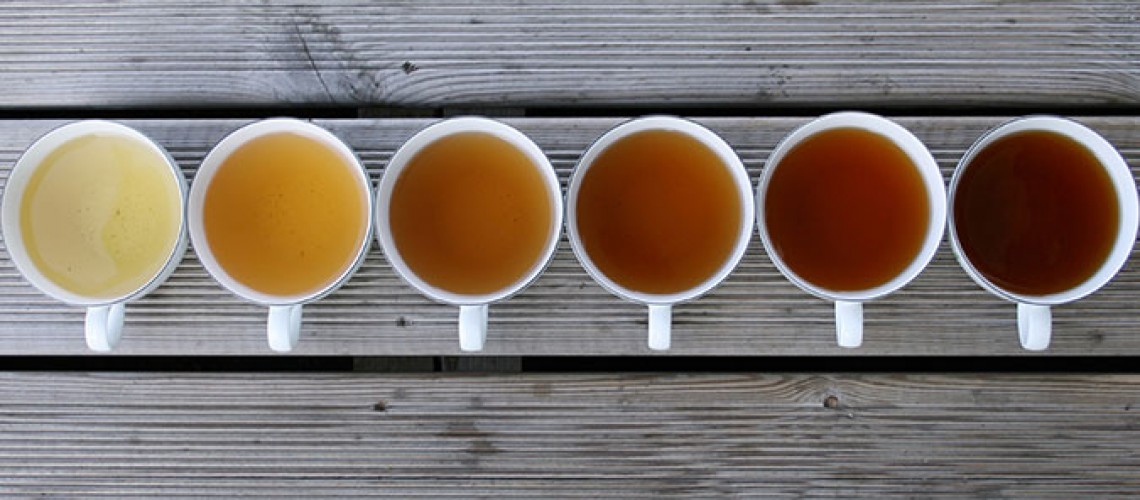
The most common way to classify Chinese tea is by degree of fermentation.
Fermentation is a special biochemical process, in simple terms - oxidation. Under the influence of oxygen, air temperature, sunlight, moisture, mechanical processing and time, the tea leaf is oxidized, changing the taste, aroma, acquiring other healing properties.
According to the degree of fermentation, tea is divided into 6 groups:
- white tea
- green tea
- yellow tea
- oolong tea (oolong, turquoise tea)
- red (black tea)
- puer
White tea

White tea is slightly fermented (5-10%), but at the same time, the degree of its fermentation is slightly higher than that of green tea. Tea got its name for the white silvery villi that cover the tea bud. Tea undergoes a minimum of processing, so the villi remain on the kidneys and leaves. White tea is not fried or twisted, it is simply dried like medicinal herbs. All stages of processing white tea are manual, very delicate raw materials do not tolerate machine interference. The best grade of white tea Silver Needles is 100% tea buds (tipsa). It is in the tea kidney that all the healing properties of tea are concentrated. White tea is considered the most useful, it contains the maximum amount of antioxidants, can serve as a prevention of cancer.
White tea should not be brewed with boiling water - scalded weakly fermented tea leaf loses its delicate sweet taste and most healing properties.
Green tea

Green tea is unfermented (2-5%). The technology for the production of green tea is thought out in such a way as to preserve all the healing properties of the freshly picked tea leaf. In order to stop the fermentation process and keep the tea leaf green, the raw materials are subjected to short-term exposure to high temperature in a tea oven or steamed.
There are many varieties of green tea. Its taste, aroma and effect depends on the type of leaf, tea bush variety, harvest time, processing technology and many other factors. The quality of green tea is primarily determined by the initial raw materials - buds and leaves, collected in early spring. Green tea is demanding on brewing conditions - like white tea, it cannot be brewed with boiling water and it is undesirable to insist for a long time - bitterness may appear in the taste.
Green tea has a very short (maximum six months) shelf life. Provided that the tea was stored in a sealed container in the refrigerator, it can be stored longer, but still the fresher - the tastier and healthier.
When choosing green tea, pay attention to the color of the leaves and their integrity - the tea should not have crumbs and dust, they should be uniform from light green to dark green. The aroma is grassy, delicate, with notes of fragrant hay and spring flowers, but by no means fish! High-quality green tea is deliciously delicious, fragrant, sweetish and very healthy.
Yellow tea
Yellow tea is higher in fermentation than green tea. Rare enough tea, even in China itself. It is easy to confuse with green - it has a similar appearance, aroma and effect on the body. It differs from green from an additional stage in the technology of processing tea leaves - languor. It is wilting that gives a special, slightly smoky note to yellow tea. It is quite difficult to produce yellow tea using proven technology: the highest quality raw materials and an experienced technologist are required, and even in this case, the result is not always predictable. Due to the complexity of production and the high cost of the final product, yellow tea is not widely used.
Oolong tea (oolong, turquoise tea)

Oolongs are divided into weakly fermented (20-30%) and highly fermented (50-70%). The production technology of oolongs is the most complex, it involves many different stages - twisting, drying, drying, roasting - it is unique for each grade. In appearance, dry Oolong tea may look like tightly twisted balls or spirals. Green oolongs, such as Te Guang Yin, tend to have a spherical twist, while roasted dark (or red) oolongs, such as Da Hong Pao, are similar tobut spirals. Accordingly, the color of dry Oolong tea can vary from light green to dark brown.
Oolongs are island and continental, aromatic and elite alpine. The palette of tastes and aromas, as well as the price range, is very extensive. The raw material for oolongs is a flash - 3-5 top leaves along with a kidney and a twig. Cuttings in some varieties are selected manually. High alpine Taiwanese oolongs that can literally give a state of happiness are very appreciated, but they are also not cheap.
Red (black) tea

Fermented tea (70-100%). It is very popular because Europeans are used to it and fell in love with it long before they learned about the existence of green tea. In the process of oxidation, enzymes are formed in the sheet, which color the finished drink in red-brown color. Hence the slight confusion in the names - the Chinese call the tea red for the color of the finished drink, and the Europeans call black for the color of the dry tea leaf. Although, some varieties of Chinese black tea and in dry form do not look black - it is tea that contains a lot of tea buds. Tipsa in the fermentation process does not turn black, but remains golden - red. Black tea with a high content of tea buds is valued above all, it has a delicious floral - honey aroma and a dense sweet taste. The best black tea is produced in Yunnan.
In dry form, black tea can be completely black and golden orange, large-leafed and ground - it depends on the variety.
Puer

Puers, in turn, are divided into shu (black) and shen (green).
In fact, young green puerhs are slightly fermented and are like green or even white tea. The difference is that over time they mature and turn into black puer. Green and white tea deteriorates with age, while puer tea, on the contrary, blooms.
Black Puer - post-fermented tea. Accelerated fermentation is achieved by storing pressed or loose puer in conditions of high humidity and air temperature.
Accordingly, in dry form, Shu and Shen Puerh look different. For example, white puerh is 100 percent made of tips, and therefore it is white in appearance. A sheet of shen puer can be from greenish brown to black with golden spots of a tea bud, while shu puerh is always much darker in appearance - from brown to black.
Puers are loose and pressed (the form of pressing is also very different: pancake, brick, dot, mini). There is also a separate tea product - puerh resin.
Summary
According to the Chinese classification, tea is divided into 6 types according to the degree of fermentation: white tea, green tea, yellow tea, oolong tea, red tea and puer. Among them, the most weakly fermented is green, and the most fermented is shu puer. Each type of tea has its own taste - aromatic characteristics and beneficial properties.
Enjoy your tea with i-tea.club!
White tea. Many of you wondered why tea is called white?Because the color of the infusion is colorle..
Green tea... there are literally legends about its benefits. Not surprisingly, the upper leaves and..
Oolong tea (oolong) or zing cha (turquoise tea) got its name not because of the turquoise color of t..
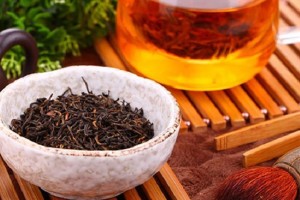
Red tea in China is called tea, which we Europeans consider black.Sometimes we call red tea made fro..

Talk about puerh can be infinite. The point is not only that this is the most "tea", the most Chines..
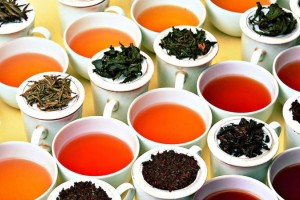
We all heard and read a lot about the benefits of tea. Still, among such a variety of tea, represen..
Recommended

Synonyms: Alishan Gaba-tea, Alishan Green Gaba-tea, Gabaron-Chai tea, Alishan-Chabaron tea, Alishan Green Haba-tea, GABA-green tea..
280 грн.

Shu Puer Golden Buds - a little holiday every day! The advantages of this shu puer are the high content of the tea bud, which c..
285 грн.

Shen Puer Xiaaguan Gold Ribbon 2017 - green puer in the form of Tochi. A golden ribbon is pressed inside the tea, which is a kind ..
310 грн.

Alishan Oolong - happiness in every throat! Taiwan's business card, the best among Taiwanese oolongs. Presented to official gue..
294 грн.

Jin Lo Dian Hong (Golden Snail) is the king among Yunnan red teas. Elite Yunnan red tea made in the north of Yunnan, Puer Count..
90 грн.

Eyelashes Beauty - beauty and vigor every day! Synonyms: Eyebrows Beauties Chiang Mi's Chinese green tea is a part of a grou..
198 грн.

Silver Snail - the embodiment of your fantasies Silver Snail is a classic white tea from China, twisted into funny spirits in t..
85 грн.

Kimun is a strong, black, intoxicating, fragrant breath of inspiration from fatigue and depression with a soft "smoke". Synonym..
215 грн.

Warming and hugging evening tea with honey notes of dried fruit for lovers of classic black. Synonyms: Red Yunnan tea, Dian Hon..
141 грн.

Dian Hong - your inspiration and harmony with the heady aroma and rich taste! Dian Hung is autumn! Dian Hoon is a red tea that ..
163 грн.

Golden Brow - delicately curled tea leaf and golden bud. This tea is not only beautiful, it is incredibly tasty and fragrant! ..
138 грн.

Happy Raja - the taste and emotions of childhood! Indian black tea, which returns to childhood not only the taste and aroma, bu..
150 грн.

Assam is the strongest of all Indian teas. About half of the tea produced in India is grown in the Indian state of Assam. The t..
270 грн.

Ceylon black tea - the usual taste and aroma from childhood! Tea grown on the tea island itself. Sri Lanka (Ceylon) is recogniz..
210 грн.

Xiao Zhong - warm embrace of an old friend, coziness and comfort in every mouthful. Effect: warms, improves mood and well-being..
165 грн.