
Black tea - Red tea. Fermentation of tea. Beneficial features


- 20 may 2018pmEurope/KievSun, 20 May 2018 21:11:59 +03002018pSundaypm18
- Views: 8762

Sometimes we call red tea made from sudan rose petals (hibiscus). Karkade drink is not quite correct to call tea, because it has nothing to do with the tea bush (Camellia sinensis).
So - red or black?
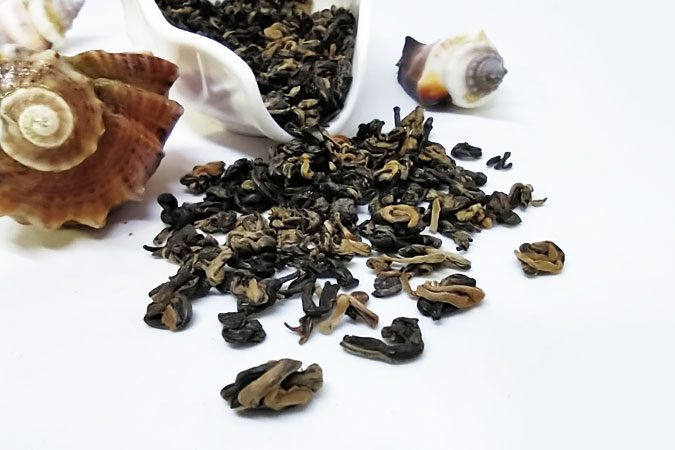
Why did such confusion in terminology arise? Looking at the color of the dry tea leaf, completely fermented, we determine that it is dark brown or almost black. Hence the name - black tea.
But you must admit, the color of the prepared beverage is rather reddish-brown, but not black at all. Almost black color of infusion can give Shu Puer tea.
The Chinese, focused more on the final result, call this tea red - according to the color of the finished drink. In fact, it is a pleasure to watch the color of the drink from reddish - amber to ruby in a transparent bowl!
But the reason is not only in the color of the finished infusion. The fact is that we are accustomed to ordinary tea, which is sold in supermarkets. The tea leaf of such tea is really almost black, it is completely fermented and contains an extremely small percentage of tips (unopened tea bud) - which does not darken during the fermentation process.
The raw materials for high-end black tea are the top tea leaves and unopened buds. For the most valuable exclusive varieties of black tea, such as Dian Hong, Golden Yunnan, Golden Eyebrows - they collect only a kidney, without leaflets. You catch the meaning - already from the name it is obvious that the tea leaf is not black.
The maximum amount of useful substances is concentrated in the tea bud; the tipsa concentrates in itself all the energy of the tea plant.
A golden tea bud gives the taste of tea a sweetish fruity notes of honey, sometimes it is difficult to believe that such a delicious aroma and taste is the natural virtue of tea, without impurities and chemical flavors. Therefore, the varieties of black tea with its high content are so appreciated by tea gourmets around the world.
There are other varieties of black Chinese tea - for example, Keemun. Dry tea looks black, sometimes the tea leaves are crushed to achieve maximum strength and even a pleasant tarp in the taste. Such types of red tea will appeal to lovers of classic black for their strength, bright thick aroma and dark brown color of the infusion.
Legend
There is an ironic legend that black tea appeared supposedly by chance. A caravan with freshly picked green tea was heading for Europe. The road was long, the drovers sought to deliver the goods as quickly as possible - because the fresher the tea, the more aromatic and tasty it is, the higher its cost. On the way, several bags of tea fell from the loaded camels, and the drivers did not notice and did not pick them up.
When the caravan came back - the bags were found. A couple of months passed, the tea lay in the heat, the sun was scorching, it was cold at night, and the morning dew moistened it - and this process was repeated day after day. The drivers decided that tea was hopelessly spoiled, but they still picked it up and made a drink.
The tea turned out to be strong, sweetish - tart, filling force, and, importantly, resistant to storage! Since then, mostly black tea has been supplied to Europe. That is why we learned about green tea not so long ago, agree ;-)
Believe the legend or not - you decide. Drinking green or black is also exclusively your choice, but we know that these are two completely different drinks, with exceptional beneficial properties and taste and aroma characteristics. And yes, collected from the same plant.

Production technology
Indeed, how do we get such a different end product from the same raw material?
It's all about fermentation. Green tea remains green because the fermentation process is stopped by strong short-term roasting or steaming the tea leaf.
The processing of black tea includes steps such as drying, twisting, fermentation and drying. As a result, fermentation of black (red) tea reaches from 70 to 100%, whereas for green this percentage is 2-5%.
What is useful black tea
Black tea contains flavonoids, chlorophyll, polysaccharides, proteins, aromatic and resinous substances, essential oils, pectins, carbohydrates, vitamins of group B, vitamins C, P, A, E, K, carotene and also minerals - potassium, calcium, magnesium, iron , sodium, manganese, etc.
The beneficial properties of red tea are largely due to the content of vitamins.
- Carotene and vitamin A improve the condition of hair, bones, teeth, skin and mucous membranes, protect eyes and respiratory organs.
- B vitamins support the work of the nervous system, muscles, heart, improve the absorption of nutrients by the body, help to overcome the symptoms of motion sickness.
- Vitamin C in combination with vitamin PP strengthens bone and connective tissue, normalizes and supports the immune system.
- Vitamin K in red tea is also quite a lot, and it plays an important role in the process of normal blood coagulation, regulating the functions of the liver.
Black tea effect
Contrary to popular belief, black tea contains significantly less caffeine than green tea. This tea can be safely drunk at night, it warms and pacifies. Varieties with a high content of tea buds gently tone up, align emotionally and inspire creativity.
A wonderful evening tea for family tea drinking and soothing serene dreams. In the cold season it warms perfectly. Red tea - as a spiritual friend - always hugs and understands. Try real red tea - and you will definitely fall in love with it!
Enjoy your tea with i-tea.club!

Colds have come, often even at home or in the office, it is not warm enough, hands and feet freeze, ..
In addition to the obvious difference in taste, infusion color and aroma, black and green tea have c..
Tea is not inferior to coffee in popularity, and in some countries it leads in consumption. We can n..

Calm, only calm is Carlson's famous phrase, especially relevant in our time.The dynamics of the life..
Recommended

English breakfast is a harmonious blend of Indian and Ceylon black tea. The impeccable taste and elegance of the Queen of England!..
220 грн.

Assam is the strongest of all Indian teas. About half of the tea produced in India is grown in the Indian state of Assam. The t..
270 грн.

Happy Raja - the taste and emotions of childhood! Indian black tea, which returns to childhood not only the taste and aroma, bu..
150 грн.

Golden Brow - delicately curled tea leaf and golden bud. This tea is not only beautiful, it is incredibly tasty and fragrant! ..
138 грн.

Red tea from Kenya - the taste of sunny summer is always with you! Kenyan red tea? Yes, this is a discovery! Close your eyes, i..
120 грн.

Kimun is a strong, black, intoxicating, fragrant breath of inspiration from fatigue and depression with a soft "smoke". Synonym..
215 грн.

Warming and hugging evening tea with honey notes of dried fruit for lovers of classic black. Synonyms: Red Yunnan tea, Dian Hon..
141 грн.

Ceylon black tea - the usual taste and aroma from childhood! Tea grown on the tea island itself. Sri Lanka (Ceylon) is recogniz..
210 грн.

The pearl of Yunnan, soft, sweetish, very fragrant, will give you an unforgettable evening and vivid dreams. Synonyms: Red Yunn..
480 грн.

Lapsang Souchong - special smoked tea for lovers of the exotic. Synonyms: Xiao Zhong, Xiaozhong. Effect: gives comfort, ..
136 грн.

Xiao Zhong - warm embrace of an old friend, coziness and comfort in every mouthful. Effect: warms, improves mood and well-being..
165 грн.

Jin Jun Mei - charm and inspiration for a new day. Synonyms: Golden Eyebrows Skakun. Jin Jun Mei is a red tea grown in the W..
130 грн.
Kimun is a strong, black, intoxicating, fragrant breath of inspiration from fatigue and depression with a soft "smoke". Synonym..
215 грн.
Warming and hugging evening tea with honey notes of dried fruit for lovers of classic black. Synonyms: Red Yunnan tea, Dian Hon..
141 грн.

Dian Hong - your inspiration and harmony with the heady aroma and rich taste! Dian Hung is autumn! Dian Hoon is a red tea that ..
163 грн.
Golden Brow - delicately curled tea leaf and golden bud. This tea is not only beautiful, it is incredibly tasty and fragrant! ..
138 грн.
Happy Raja - the taste and emotions of childhood! Indian black tea, which returns to childhood not only the taste and aroma, bu..
150 грн.
Assam is the strongest of all Indian teas. About half of the tea produced in India is grown in the Indian state of Assam. The t..
270 грн.
Ceylon black tea - the usual taste and aroma from childhood! Tea grown on the tea island itself. Sri Lanka (Ceylon) is recogniz..
210 грн.
Xiao Zhong - warm embrace of an old friend, coziness and comfort in every mouthful. Effect: warms, improves mood and well-being..
165 грн.