
Da Hong Pao. Myths and Reality.

- 07 August 2021pmEurope/KievSat, 07 Aug 2021 13:21:42 +03002021pSaturdaypm21
- Views: 5935
Da Hong Pao is a legendary tea that has conquered the hearts of tea gourmets. They talk about him exclusively with aspiration and awe, he is considered the most expensive tea in the world, terabytes of legends about him can be found on the Internet, he is credited with the ability to give cosmic tea states, in general, the most sensational and popularized oolong tea in all tea history, national property, pride of the Celestial Empire.
Back in 1972, a meeting between US President Richard Nixon and Great Helmsman Mao took place. As a sign of respect, Mao Zedong presented Nixon with an invaluable gift - 4 liang (about 150 grams) of the original Da Hong Pao.
The ungrateful Nixon, however, did not show the due delight, but, on the contrary, expressed dissatisfaction with the modesty of the gift. Until it was explained to him that this is a very ancient, priceless tea, and the amount is half of the total harvest.
Figuratively speaking, Mao gave Nixon half of China.
A very touching story, but what about the modern Da Hong Pao?
Let's try to figure out what is true and what is ruthless marketing ;-)
What is Da Hong Pao?

Tea produced in the north of Fujian province and processed using the cliff oolong technology.
Just tea? Where does so much noise come from?
It is believed that the real Da Hong Pao must be harvested from those very ancient mother bushes, that it is produced in very small quantities and sold exclusively at auctions. And only such a true Red Robe is able to provide real tea bliss.
But you and I are prudent people, let's turn on the logic.
What are Da Hong Pao mother bushes?
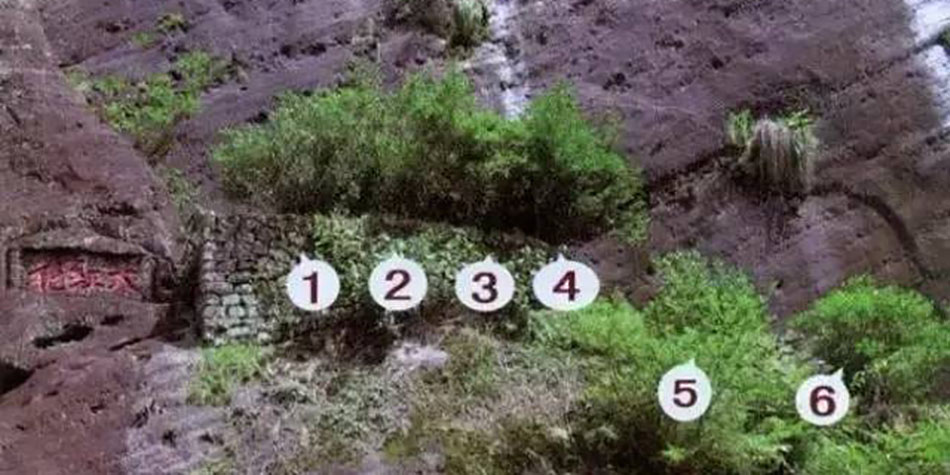
These ancient plants grow in the tourist area of Wuyishan, attracting the attention of thousands upon thousands of tea pilgrims. Romantics believe that it was their emperor who covered his royal red robe in gratitude for the healing of his mother.
Skeptical tea experts argue that these bushes are different varieties of the tea plant and no tea can be obtained from them.
Not everyone knows that in 2006 the government of Wuyi imposed a ban on the collection of raw materials from Da Hong Pao mother bushes. The last batch collected is preserved at the Gugong Museum in Beijing. Facts are stubborn things.
So you can only see the real Da Hong Pao in a museum?
If we give the definition of "real" only to the Red Coat that was collected from the mother's bushes, then - alas, only in the museum. Although, undoubtedly, most tea sellers will claim that only they have the most authentic, largest and most red robe ;-)
Grade and cost Da Hong Pao
If you are saddened by the inability to purchase Da Hong Pao from the mother bushes due to the ban on harvesting raw materials, you may be comforted by the fact that 20 grams of tea from the penultimate "mother" batch was sold at auction in 2005 at a price of 208,000 yuan (approximately $ 32,000). which significantly reduces the attractiveness of the acquisition idea itself ;-)
Da Hong Pao, produced today by the tea masters of Wuyishan, is a blend of two main types of tea bush - Shuixiang and Zhou Gui.
Depending on the proportional ratio of these varieties, many variations in tastes, aromas and costs can be achieved, which the tea producers of Wuyishan skillfully use. Hence the widest choice of Da Hong Pao at any price point. The possibilities for the formation of a unique, inimitable tea from excellent raw materials of an expensive brand are practically unlimited.
Of course, the quality of the new Da Hong Pao also depends on the quality of the raw materials and the skill of the manufacturer. The correct roasting of tea is especially difficult; this process requires experience and skill.
How to determine the quality of Da Hong Pao
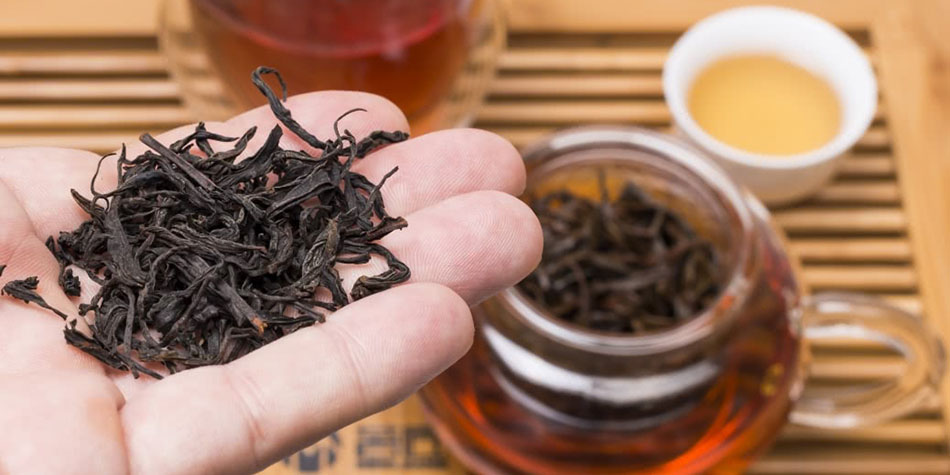
Based on the above, it becomes clear that the standard of taste and aroma of Da Hong Pao does not exist. Taste and aroma nuances can vary greatly. Depending on the composition of the blend and the degree of roasting, the aroma can vary from floral herbaceous to nutty caramel, the taste - from tart astringent to velvety spicy.
The color of the finished tea infusion also ranges from amber-golden to dark brown.
The following parameters remain an unambiguous criterion for determining quality:
- dry tea should be monochromatic, in the form of twisted spirals from dark olive to chocolate brown, almost black
- no dust, broken leaves, foreign debris
- pure aroma - without shades of grandmother's shed, rotten tomatoes, fish oil, mold and other unpleasant nuances. As a rule, such shades in the aroma indicate improper storage or roasting of tea.
- taste without bitterness or pronounced sourness
- infusion color is clear, transparent, without turbidity and suspension
The Da Hong Pao Effect
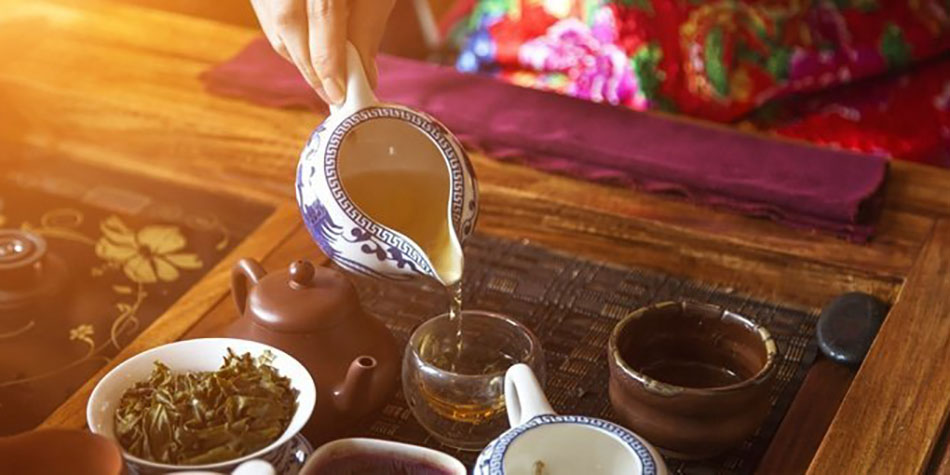
How can it be without him? In this article, we managed to avoid legends about the Red Robe - a too hackneyed topic, but we simply must write about the famous Da Hong Pao effect! ;-)
Let's make a reservation right away - tea is not a drug. Tea does not rush, does not flatten and does not stick.
According to numerous surveys, our buyers describe the effect of Da Hong Pao approximately the same to:
- pleasant physical relaxation of the whole body is felt, movements become smoother, at the same time perfect coordination and balance is maintained
- a feeling of comfort and harmony with the outside world appears
- creativity and creativity increase, the brain generates new ideas and non-standard solutions to problems
- irritability goes away, sympathy for the people around arises, there is a desire to do something bright and pleasant for everyone
- general relaxation increases communication skills, adjusts for easy and casual communication
That's how it is, Da Hong Pao's tea intoxication. And no hangover - just a pleasant state and health benefits!
Of course, in order to get maximum pleasure from tea, it is advisable to follow the rules for brewing tea, choose the right dishes and pleasant company.
How to brew Da Hong Pao
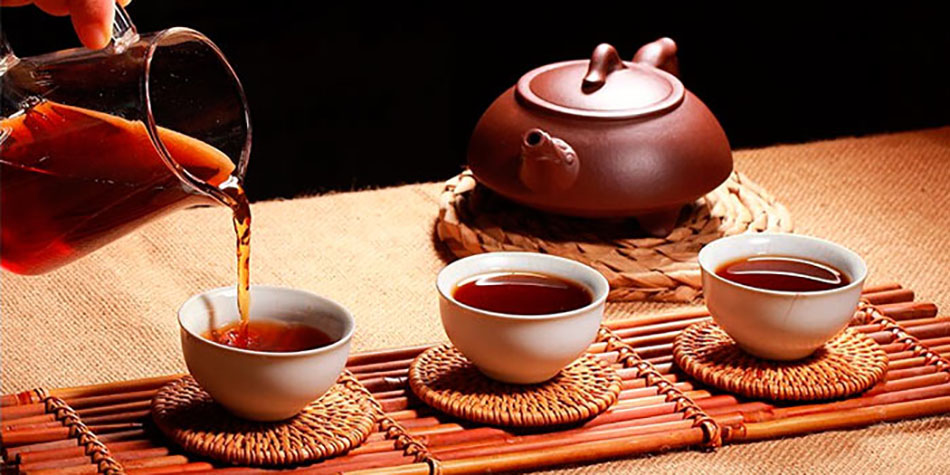
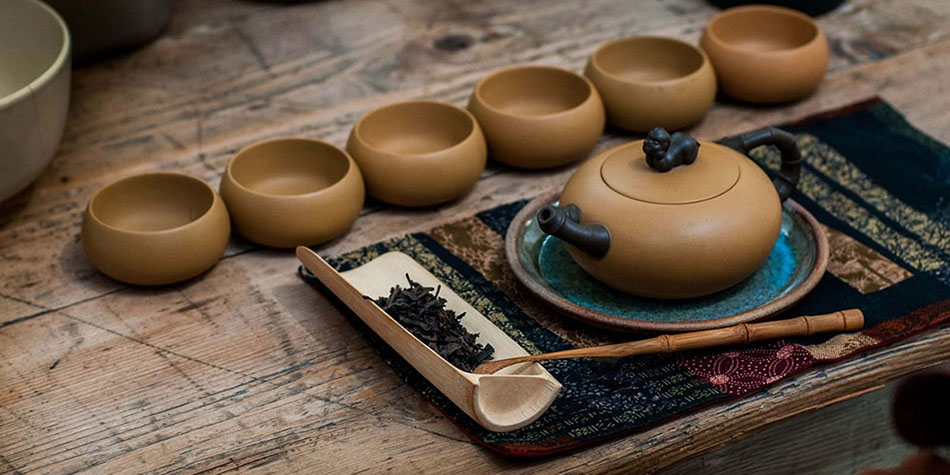
Spilled, like other good tea. In a small clay teapot, gaiwan or teapot with a button. Repeatedly, enjoying every sip, every bowl, observing the changes in taste, aroma, plunging into a tea state with your head.
Summary
A good Da Hong Pao does not have to be harvested from mother bushes and cost like a studio apartment. Most of the myths about ancient tea bushes are a tribute to marketing. Delicious new Da Hong Pao, produced by the skillful hands of Wuyishan masters, will give you the most pleasant tea condition, rich taste and multifaceted aroma.
Drink good tea and be healthy!
Recommended

Da Hong Pao - the legendary Chinese Oolong tea, gathered in the mountains of Wuyi, is one of the top most expensive teas in the wo..
379 грн.

The younger brother, Da Hong Pao, who has a very similar taste, aroma and properties, will also be pleasantly surprised by the cos..
100 грн.

Mi Lan Dan Tsun translates as "Lonely bushes with the scent of honey orchids." This oolong is equal in effect to champagne. Syn..
295 грн.

Feng Huang Dan Cong - the famous Chinese Oolong tea, produced in Guangdong Province, the southernmost and warmest province of Chin..
643 грн.

Highest quality Guangdong oolong with the natural aroma of osmanthus. Not flavored! A delicious fruity aroma gives this oolong ..
277 грн.

Guangdong oolong of the highest quality. Guangdong Oolong Tea (Chaozhou Cha) is grown in Guangdong Province, famous for its tea..
265 грн.

Da Hong Pao is a tea legend. But it does not have to be worth all the money in the world. We have found for you the excellent Da H..
250 грн.

Kimun is a strong, black, intoxicating, fragrant breath of inspiration from fatigue and depression with a soft "smoke". Synonym..
215 грн.

Warming and hugging evening tea with honey notes of dried fruit for lovers of classic black. Synonyms: Red Yunnan tea, Dian Hon..
141 грн.

Dian Hong - your inspiration and harmony with the heady aroma and rich taste! Dian Hung is autumn! Dian Hoon is a red tea that ..
163 грн.

Golden Brow - delicately curled tea leaf and golden bud. This tea is not only beautiful, it is incredibly tasty and fragrant! ..
138 грн.

Happy Raja - the taste and emotions of childhood! Indian black tea, which returns to childhood not only the taste and aroma, bu..
150 грн.

Assam is the strongest of all Indian teas. About half of the tea produced in India is grown in the Indian state of Assam. The t..
270 грн.

Ceylon black tea - the usual taste and aroma from childhood! Tea grown on the tea island itself. Sri Lanka (Ceylon) is recogniz..
210 грн.

Xiao Zhong - warm embrace of an old friend, coziness and comfort in every mouthful. Effect: warms, improves mood and well-being..
165 грн.