
Tea tools. Everything you need to know.

- 04 June 2021pmEurope/KievFri, 04 Jun 2021 20:26:10 +03002021pFridaypm21
- Views: 9903
Tea tools, they are tea accessories or tea accessories, are an integral part of the correct brewing of tea. This is not only the entourage, the attributes of the tea ceremony, they have a completely functional purpose.
You can do without tea tools, but when it comes to making real tea, you should treat this process with care. If only for the reason that the use of tea tools makes the brewing process itself not only comfortable, but also more in-depth, meaningful.

Using tea tools, you are immersed in the atmosphere of tea action, you are aware of every movement, you pay maximum attention to tea. This is what guarantees the very amazing tea states that you expect to get from real tea.
Of course, you can do without them. But in traditional tea drinking you wouldn't stir the sugar with your finger, would you? Or drink precious cognac from a plastic glass? Or, say, eating spaghetti with a spoon? You won't.
The process of making real tea does not have to be very complicated, ceremonial, but the use of tea tools allows you to fully reveal the taste, aroma of tea and get maximum pleasure from tea drinking.
Where to start when choosing tea tools?
The choice of tea tools, like tea utensils, depends on many factors. This is the type of tea that you plan to brew, and the number of participants in the tea party, and the time you are ready to devote to tea drinking, as well as the correspondence with the tea utensils in which you will brew and from which you will drink tea.
For beginners in the tea business, a ready-made set of tea tools is quite suitable. Typically, it includes everything you need to brew properly.

But, if you are ready to approach the choice in more detail, based on your individual needs, we will analyze each tool separately - what is it for, how it is used. Imagine the process of brewing tea as you usually do - this will help you choose exactly the tools you need.
What kind of tea tools are there?
Scoop (spoon) for tea.

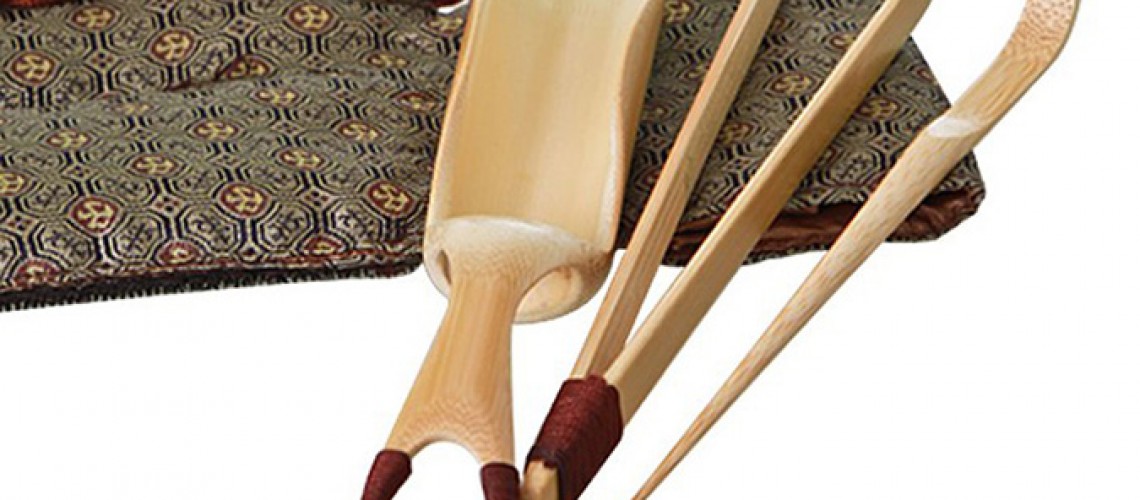
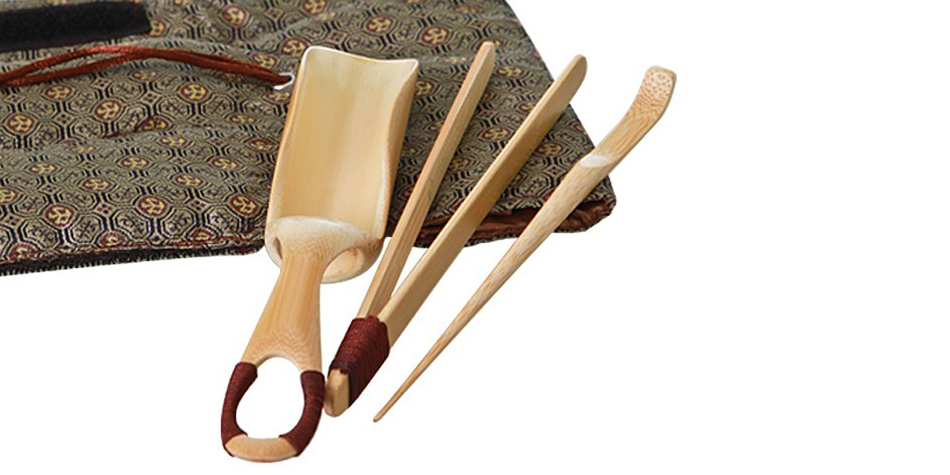
The Chinese name for Chashao (茶 勺 chásháo) is a scoop used to draw dry tea and place the tea leaf in a teapot or gaiwan. Spoons are made from metal, plastic, bamboo, or other wood.
Often in tea sets there is another smaller spatula. It is called Chachi (茶匙 cháchí) and is flat in shape and is designed to move dry tea from chahe (if you are using it) to a teapot or gaiwan. This spatula is also used to stir the tea during boiling, straighten the tea leaf during brewing, and use it for other manipulations with the tea leaf.
If you will brew loose, bulky tea such as White Peony or Da Hong Pao, it is more convenient to use tongs or tweezers instead of a spoon.
Forceps or tweezers
The Chinese call this tea accessory Jiazi (夹子 jiāzi) or Chaga (茶 夹 chágā). Used to set loose tea in a teapot, to stir tea during brewing. But the main purpose is to take the bowl by the edge with tongs, when the water is drained after warming up, so as not to burn yourself while rinsing the dishes. Also, using tongs, you can serve bowls to guests so as not to touch the edge of the cups with your fingers - this is elegant and aesthetically pleasing.
Chahe (tea lotus, tea box)
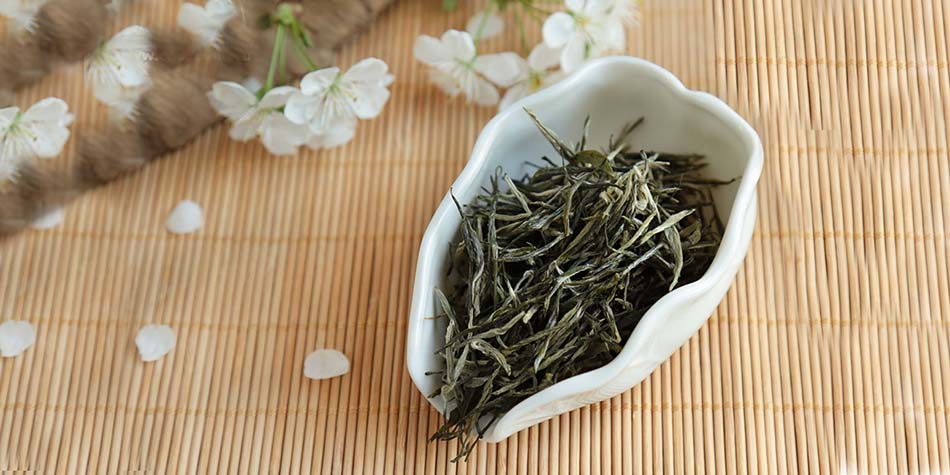
Chahe (茶 荷 cháhé) is also poetically called "the breath of tea." The container is intended for acquaintance with the aroma and appearance of dry tea leaves. This is a small porcelain or wooden container with a notch on one side. Chakhe is taken with two hands and warmed in the palms to give the tea leaf a piece of its warmth and allow the aroma to begin to unfold. We bring chakhe with tea to the face with a notch outward so that the air circulates freely, after which we slowly inhale the aroma of dry tea three times.
Tea needle

Chatszhen (茶 针 cházhēn) is used to clean the spout of a teapot if it is clogged with tea leaves. This can happen when you brew large leaf tea such as oolong tea. Agree, the graceful movement of the tea needle inside the spout is much more aesthetically pleasing than opening the lid and stirring up all the contents.
Tea funnel
Chalou (茶 漏 chálòu) is used for the convenience of placing large leaf tea in a narrow-necked teapot. It is used quite rarely, since for such tea tea aesthetes prefer to choose a teapot with a wider neck or use gaiwan.
Tea grip
Cha Bei Jia (茶杯 甲 chábēi jiǎ) is used to carry hot bowls. With this cup grip, you can conveniently and gracefully serve tea to a guest, especially if he is sitting far away. Before you start drinking tea, make sure that your tea grip matches the diameter of your bowls.
Tea tray, bowl stand
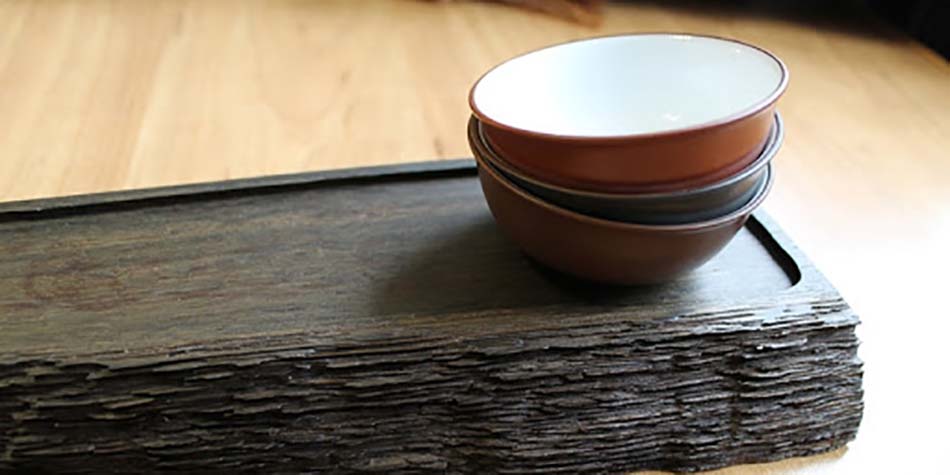
Chatou (茶托 chátuō) aesthetically complements a tea cup, a kind of analogue of a saucer in a Chinese tea ceremony. It is convenient to serve a hot bowl to the guest without touching it with your hands. If you are using tea pairs, the chatou should be elongated to accommodate the celestial and earthly cups side by side. This accessory is often used to study the leaf at the end of a tea party.
Separation knifepressed tea

It has no sharp edges and allows you to separate the part of the pressed tea necessary for brewing without damaging the tea leaf. It can have the shape of a double-sided blade or a more rounded, pointed shape - then it is called an awl for pu-erh. The latter is used for tea with very dense pressing.
Tea ceremony brush
Designed to care for a clay teapot during tea drinking. With its help, drops are collected, flowing from under the lid along the walls of the teapot. Thus, the teapot absorbs the tea infusion and acquires a noble shine. But the action itself - smooth circular movements of the brush along the walls of the teapot - fascinates and provides special tea states.
Summary
There are many more tea paraphernalia - tea linen, tea couples, chaban ... but you don't have to use all of the above. Tea tools are designed to provide you with the most comfortable tea drinking and complete pleasure from making and drinking tea.
Choose the tools you need for your individual tea drinking and enjoy the process!
Enjoy your tea with i-tea.club!

Kimun is a strong, black, intoxicating, fragrant breath of inspiration from fatigue and depression with a soft "smoke". Synonym..
215 грн.

Warming and hugging evening tea with honey notes of dried fruit for lovers of classic black. Synonyms: Red Yunnan tea, Dian Hon..
141 грн.

Dian Hong - your inspiration and harmony with the heady aroma and rich taste! Dian Hung is autumn! Dian Hoon is a red tea that ..
163 грн.

Golden Brow - delicately curled tea leaf and golden bud. This tea is not only beautiful, it is incredibly tasty and fragrant! ..
138 грн.

Happy Raja - the taste and emotions of childhood! Indian black tea, which returns to childhood not only the taste and aroma, bu..
150 грн.

Assam is the strongest of all Indian teas. About half of the tea produced in India is grown in the Indian state of Assam. The t..
270 грн.

Ceylon black tea - the usual taste and aroma from childhood! Tea grown on the tea island itself. Sri Lanka (Ceylon) is recogniz..
210 грн.

Xiao Zhong - warm embrace of an old friend, coziness and comfort in every mouthful. Effect: warms, improves mood and well-being..
165 грн.