
Milk Oolong. Truth and fiction


- 28 July 2018pmEurope/KievSat, 28 Jul 2018 12:17:00 +03002018pSaturdaypm18
- Views: 9631

Milk Oolong is one of the most popular Chinese teas. Moreover, when they say the word “oolong”, many of them are the Milk Oolong, and they do not even mean that oolongs are a whole large group that includes tea of various tastes and aromas.
But it so happened that it was from Milk Oolong that they often begin to get acquainted with Chinese teas. After that, starting to delve into and explore the immense world of Chinese tea, we begin to distinguish the subtle flavors of white tea, the piercing freshness of green tea, the mysterious walnut woody notes in puer, the fruity floral bouquets in the flavors of oolongs and other varieties of flavors and tastes. But they start from the milk one, because it is understandable, bright and unassuming, it impresses at the first sip with its simplicity, such a homely - delicious caramelly creamy aroma and usually like by literally everyone. And even people who are indifferent to tea in principle, at least remotely, but have heard that there is such tea - Milk Oolong.
What is the secret of such popularity?
The first is fragrance. Aroma of condensed milk, familiar and loved since childhood. In different varieties of Milk Oolong, the aroma can be complemented by the nuances of sweet baking, vanilla ice cream, caramel, baked milk, and even toffee. In any case, this aroma is pleasant, immediately causes positive emotions and the desire to quickly try this snack. And when we take the first sip, the taste buds are already prepared for pleasant sensations.
The taste of a good milk oolong is soft, rounded, sweetish - fresh, with hints of fresh cream and caramel ... in general, the taste buds get what they expected - a pleasure without stress and surprises. This tea is similar to mother's embrace, it gives a feeling of comfort, security, peace, brings back memories of a happy and carefree childhood. Naturally, such emotions are pleasant to all, without exception, so Milk Oolong is the first love of almost every beginner.
But, nevertheless, many have a logical question - why does tea smell like milk?
Flavoring secrets
Alas, tea bushes are not watered with milk; in the process of drying, tea leaves are not sprinkled with pineapple juice, are not soaked in cane sugar infusion, and are not even stored near the dairy plant. And I would not like to disappoint you, but we suspect that not only virgins are collecting it)) Joke.
The most common flavoring called Nai Xiang (Milk flavor) is an alcohol solution in 20 liter cans. It is made in Japan and Germany. Nai Xiang flavor is added after the tea leaf is fermented before being cooked. Only 100 grams of flavoring is used per ton of tea leaf.
There are other lower quality flavors, our chemical industry is excellent. They differ in flavor nuances - it can be caramel, toffee, chocolate and more. The intensity of flavoring is easily regulated, so the saturation and flavor of different milk oolongs can differ significantly.
How did you get the idea to combine tea aroma with dairy
Taiwanese tea breeders brought a variety of tea that had a light creamy aroma of caramel.
The variety #TTES-12 camellia tea was created by the breeders of the Taiwan Tea Experimental Station in 1980, primarily for the production of poorly fermented oolong (the so-called turquoise teas) received the poetic name "Golden Flower" (Jin Xuan).
European buyers liked the tea, but they began to demand a more saturated creamy aroma and a reduction in the cost of tea. Demand creates supply, so the Taiwanese have no choice but to resort to flavoring. Later it turned out that the cost of tea can be quite lowered using simpler tea, since the delicate creamy notes of the Jin Xuan variety were still lost against the background of the intense aroma of Nai Xiang.
Let's be honest and note that artificial aromatization, in most cases, is exposed to teas from raw materials of mediocre quality. High quality tea does not need a neighborhood of third-party flavors.
There are varieties of tea that have natural caramel notes in taste and aroma, for example, high-mountain Taiwanese Da Yu Lin, but this taste is soft, not assertive, changeable with every harvest and can be appreciated only by sophisticated gourmets. For commercial purposes, this tea is not suitable, besides, its cost is usually too high, and the volume of production is small.
How to determine the quality of Milk Oolong
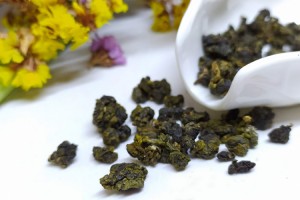
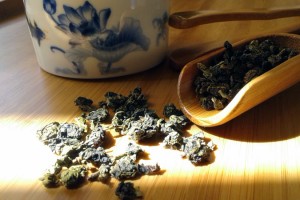
Like any other tea, Milk Oolong can be of very high quality. Determining the grade of Milk Oolong is not so difficult - Nai Xiang's aroma should not be too intense, not completely muffle the aroma of the tea itself, twisted leaves in dry form are the same in size and color, not dull, the brewed leaf is revealed large and solid. Accordingly, the cost of a good milk oolong will be higher, since more expensive raw materials and high-quality flavoring are taken for its production.
Resume - to drink or not to drink?
The idea of milky flavoring of oolong is neutral and does not give grounds for a biased attitude to this tea. Especially in the case when the flavoring is designed to emphasize the virtues of tea, and not to hide its flaws. Choose a good Milk Oolong and enjoy the warmth and home comfort that it gives!
Enjoy your tea with i-tea.club!
Oolong tea (oolong) or zing cha (turquoise tea) got its name not because of the turquoise color of t..

Ginseng, ginseng root ... Men in ancient times were looking for different recipes for stimulants of ..
Te Guan Yin is a tea legend, the king among Chinese oolongs. This tea can be called a visiting card ..

Calm, only calm is Carlson's famous phrase, especially relevant in our time.The dynamics of the life..
Recommended

Milk Oolong - home comfort in every cup! Synonyms: Nai Xiang Jin Xuan, Milk Oolong, Oolong with Milk Flavor Effect: M..
292 грн.

Taiwan Milk Oolong - comfort and impeccable quality in every cup! Synonyms: Nai Xiang Jin Xuan, Milky Oolong, Milky Scent Oolon..
197 грн.

Shan Lin Xi - a fresh sip of vigor and inspiration! Synonyms: Mountain Forest Stream, San Ling Shi Shan Ling Xi is one of th..
306 грн.

Roasted Te Guan Yin is a rare black pearl in the treasury of famous oolongs! Synonyms: Tie Guan Yin, Teguanyin, Te Guanyin, Tea G..
180 грн.

Feng Huang Dan Cong - the famous Chinese Oolong tea, produced in Guangdong Province, the southernmost and warmest province of Chin..
643 грн.

Kimun is a strong, black, intoxicating, fragrant breath of inspiration from fatigue and depression with a soft "smoke". Synonym..
215 грн.

Warming and hugging evening tea with honey notes of dried fruit for lovers of classic black. Synonyms: Red Yunnan tea, Dian Hon..
141 грн.

Dian Hong - your inspiration and harmony with the heady aroma and rich taste! Dian Hung is autumn! Dian Hoon is a red tea that ..
163 грн.

Golden Brow - delicately curled tea leaf and golden bud. This tea is not only beautiful, it is incredibly tasty and fragrant! ..
138 грн.

Happy Raja - the taste and emotions of childhood! Indian black tea, which returns to childhood not only the taste and aroma, bu..
150 грн.

Assam is the strongest of all Indian teas. About half of the tea produced in India is grown in the Indian state of Assam. The t..
270 грн.

Ceylon black tea - the usual taste and aroma from childhood! Tea grown on the tea island itself. Sri Lanka (Ceylon) is recogniz..
210 грн.

Xiao Zhong - warm embrace of an old friend, coziness and comfort in every mouthful. Effect: warms, improves mood and well-being..
165 грн.