
Green tea and pressure


- 21 September 2019amEurope/KievSat, 21 Sep 2019 11:05:56 +03002019pSaturdayam19
- Views: 10755

To begin with, we’ll deal with terminology. Green tea is often called herbal infusion of mint or chamomile. But this article will focus on tea, a drink made from the leaves of Chinese camellia (Caméllia sinénsis, Chinese. К “cha”)
Does green tea raise or lower blood pressure?
The answer to this question depends on many factors. The composition of the leaves of Chinese camellia includes many active substances, including caffeine. It is he who is usually considered the cause of increased pressure.
Contrary to popular belief, there is more caffeine in green tea than in black. It would seem - it should be the other way around - black, strong tea evokes associations with the strong caffeine effect of coffee. And green seems to be the opposite - light, light ... but - no!
More about green tea: Taste and aroma, properties, benefits of green tea
The thing is that in the process of fermentation and roasting, caffeine is partially destroyed. The longer the tea leaf is exposed to oxidation and heat, the less caffeine it contains.
Green tea is subjected to a very short-term treatment with high temperature, thereby stopping the fermentation process and preserving the maximum of nutrients. In different varieties of green tea, the amount of caffeine can vary greatly depending on the processing technology of the tea leaf. But we can definitely say that there is less caffeine in black tea than in green tea.
Caffeine alone is not the root cause of high blood pressure. The main sources of manifestation of hypertension include:
- Passive lifestyle.
When a person sits at a computer all day at work or on a couch in front of a TV, the movement of blood flow through blood vessels is impeded and sharply reduced. The resistance of peripheral blood vessels rises and pressure rises.
- Frequent stressful situations, experiences.
When adrenaline is released into the blood, the heart runs to the limit, the vessels narrow. If such phenomena are not uncommon, then over time the cardiac system weakens and the disease develops.
- Cholesterol.
It provokes an ailment. Constant overeating, the use of fast food, fatty foods, sweets - badly affects all systems of the body as a whole, including blood vessels, heart.
- Heredity.
If someone in the family has a tendency to this pathology, then the child in the future may also get hypertension.
Disorders of the kidneys, lack of magnesium, thyroid disease - can be a source of the development of the disease.
- Lack of minerals.
For the normal functioning of the cardiac mechanism, it is necessary to have a sufficient amount of potassium and magnesium in the body. This will help remove excess salt, strengthen the heart and prevent blood clots from forming.
Many of these causes can be neutralized with the help of green tea.
- Minerals? Tea is known to contain a large amount of minerals, including potassium and magnesium. Scientists have proven that 5-6 cups of tea per day cover about 75% of the body's daily requirement for potassium.
- Cholesterol? Tea removes cholesterol from the body and strengthens the walls of blood vessels.
- Stress? Most varieties of good tea relieve stress, excessive nervousness and improve mood.
In addition, tea caffeine is present in the tea leaf in combination with tannin. Together, caffeine and tannin form the new substance, thein. Thein acts on the cardiovascular system much milder than caffeine, is slowly absorbed into the bloodstream and quickly excreted from the body. Therefore, the invigorating effect of tea is prolonged in time in comparison with coffee.
Read: Tea versus coffee. Where is more caffeine?
Another point. Tea acts selectively, and in many respects its effect directly depends on the individual characteristics of your body.
Japanese scientists conducted a study in which people from three groups took part. The first group was selected from people prone to hypertension, the second group included people with absolutely normal pressure, the third group consisted of subjects with low blood pressure.
For three days, the subjects drank green tea three cups a day. According to the survey on well-being - hypertensive patients noted an increase in pressure, hypotension - a tone and improved well-being, the neutrals did not notice any changes in their condition.
If you are prone to hypertension, tea can actually cause a slight increase in pressure, so hypertensive patients should not drink more than 5 cups of green tea per day. But you shouldn’t refuse at all - we remember minerals, vitamins, and just the pleasure of taste and aroma! :-)
If you consider yourself hypertensive and still afraid to drink green tea - there is a pleasant surprise for you!
What green tea lowers blood pressure? GABA green tea lowers blood pressure, relieves stress and physical stress, improves brain activity.
GABA tea Green Alishan

Green tea can also replace oolong tea - turquoise teas have less caffeine and are generally milder in effect.
More about Oolongs: Types of oolongs, production technology, useful properties, brewing oolongs, tea effect
If your pressure is lowered, tea will normalize it. But do not treat tea as a medicine. Drink with pleasure.
Green tea will only benefit people with normal blood pressure. It will give strength, energize and vitality, improve mood.
Summary
Green tea boosts pressure if you are prone to hypertension. This exposure is not dangerous, just don't get too carried away. It is known that in everything it is good to know the measure. For example, orange juice is good, right? And if 10 liters? Here! :-)
Drink good tea and be healthy!
Enjoy your tea with i-tea.club!

On the Internet there are a lot of articles on the topic "Green tea leaches calcium from the body." ..

Recently, on the Internet, you can often find information that green tea washes out iron.Iron is an ..

In the morning, in the afternoon or in the evening, when we work or have a rest, in the office, on a..
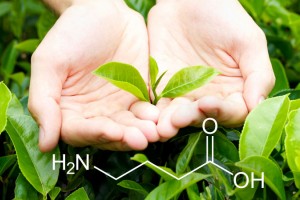
GABA tea (Gabaron tea, Gaba-tea, Jin Bai Lung cha, Jia W Lung cha) is a tea with a high content of g..
Recommended

A floral and sunny mood for the whole day, a guarantee of a romantic and sensual evening. Synonyms: Jasmine pearl, Green te..
291 грн.

Tea for geniuses is capable of making any negotiations or a deal as profitable as possible for you with one sip! Synonyms: Gyok..
637 грн.

Bi Luo Chun - the triumph of spring energy. Bi Luo Chun is translated as "Emerald spirals of spring." Green tea, twisted by sma..
215 грн.

Sweet Dew - the freshness of nature awakening at dawn, the vigor of a new day! Synonyms: Meng Ding Gan Lu, Tea from Mount Meng ..
190 грн.

Tea produced in one of the most northern regions, the special climate of which endowed the tea with an unforgettable floral aroma...
193 грн.

Included in the list of famous teas in China for a pronounced tonic effect. Synonyms - Huangshan Mao Feng, Shaggy Peaks. Eff..
105 грн.

Kimun is a strong, black, intoxicating, fragrant breath of inspiration from fatigue and depression with a soft "smoke". Synonym..
215 грн.

Warming and hugging evening tea with honey notes of dried fruit for lovers of classic black. Synonyms: Red Yunnan tea, Dian Hon..
141 грн.

Dian Hong - your inspiration and harmony with the heady aroma and rich taste! Dian Hung is autumn! Dian Hoon is a red tea that ..
163 грн.

Golden Brow - delicately curled tea leaf and golden bud. This tea is not only beautiful, it is incredibly tasty and fragrant! ..
138 грн.

Happy Raja - the taste and emotions of childhood! Indian black tea, which returns to childhood not only the taste and aroma, bu..
150 грн.

Assam is the strongest of all Indian teas. About half of the tea produced in India is grown in the Indian state of Assam. The t..
270 грн.

Ceylon black tea - the usual taste and aroma from childhood! Tea grown on the tea island itself. Sri Lanka (Ceylon) is recogniz..
210 грн.

Xiao Zhong - warm embrace of an old friend, coziness and comfort in every mouthful. Effect: warms, improves mood and well-being..
165 грн.