
Tea for restaurants, cafe, bars

- 02 may 2020pmEurope/KievSat, 02 May 2020 14:38:57 +03002020pSaturdaypm20
- Views: 9254

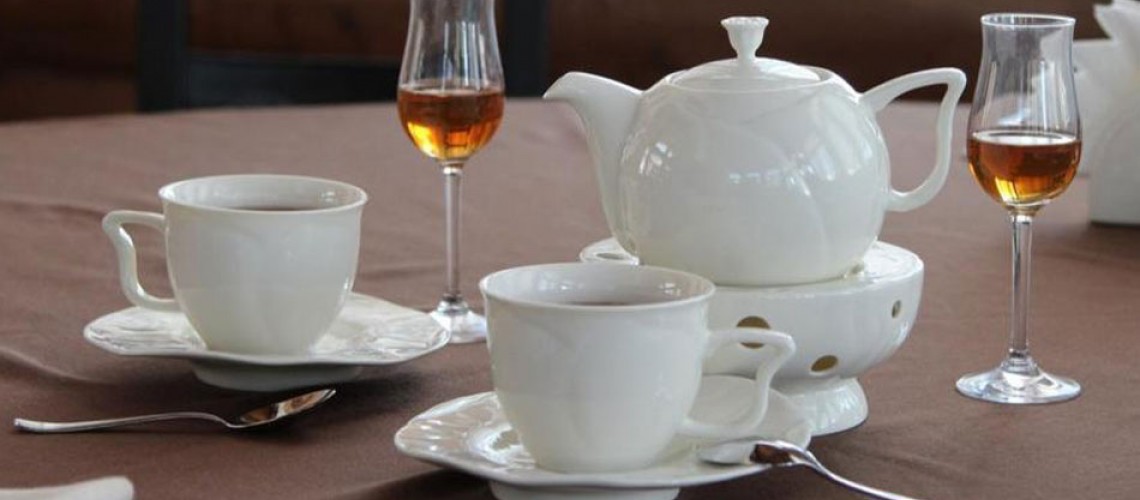
Nowadays, when tea has become a fashion trend, embodying a healthy lifestyle and fine mental organization, restaurateurs began to pay special attention to its quality, and this is the right decision. The times when a restaurant could offer you a maximum of 2 types of tea - black and green, a long time ago. Most reputable establishments try to offer the guest at least a dozen of the most popular varieties of selected tea, or even a whole tea card. Some advanced restaurateurs expand the duties of a sommelier or hire a professional tee-tester who can talk about the merits of a particular drink and help the guest make a choice.
Why is having good tea an essential part of a restaurant’s menu?
It would seem that the main goal of the guest is to eat deliciously. But it is not so. People come to a restaurant or bar for impressions. This may be your institution's signature dish with a secret ingredient, a special original presentation, atmosphere, interior, music - a combination of these factors brings pleasure, gives vivid emotions and encourages the guest to come back to you again and again.
Real tea is remembered; it surprises and inspires; moreover, tea is usually served to guests last, when they are about to leave. That is, tea drinking forms the final opinion of the guest about your institution, sums up the final line - did you like it in general or not. Just imagine - the guest enjoyed delicious dishes, fine wines, and in the end you give him some kind of flavored chemical mixture and completely spoil the whole impression of the establishment as a whole! Do not do like this.
Tea can act as an aperitif or digestif.
An aperitif does not have to be alcoholic. Now many seek to lead a healthy lifestyle and give up alcohol. While the guest is waiting for his order, offer him a cup of aromatic tea that stimulates the appetite. Green tea will cleanse taste buds for the perception of the most delicate and refined tastes. In addition, green tea stimulates appetite, and your guest will probably want to order a little more dishes than he originally intended.
As a digestif, oolong or pu-erh works excellently. This tea promotes digestion and helps to absorb heavy foods.
What should be tea for a restaurant?
- Delicious. Yes, this is the main criterion. Otherwise, what's the point in tea drinking?
- The original. Your guest drinks ordinary tea from a bag every day at home.
- Convenient to prepare. The technology for brewing tea should be clearly worked out, uncomplicated and not taking much time. Let's not forget that a restaurant is not only a place where a guest enjoys drinking tea, but also a business that should be profitable. And this business should be comfortable working with it.
- Combine with the main dishes of the restaurant menu and its concept. Say, in an Oriental cuisine institution it is completely inappropriate to serve fruit flavored tea.
Let us examine in more detail each of these conditions.
The taste of tea should be bright, memorable, recognizable, understandable not only for sophisticated teas. You can offer a guest 10 varieties of chic rock oolongs, but a person unprepared for such tea subtleties will hardly feel the difference between them and will not get the pleasure that he was counting on.
When compiling a tea card, it is better to include the brightest representatives of the tea world from each species in it, then, when trying a new tea, the guest will surely remember the new taste and be able to choose his or her favorite drink.
The originality of tea can be manifested in its taste, aroma, color of infusion or an unusual way of serving. Be attentive to guest needs. Let's just say that bound tea looks very impressive and romantic, but offering it to business partners who came to a business meeting is not entirely appropriate.
Some types of tea have a completely unique aroma that will be remembered for sure, but it can also be somewhat puzzling. For example, smoked Lapsan Souchong tea, frankly, for individual lovers.
The color of the infusion of Thai blue tea will definitely impress, but if the guest is an advanced tea gourmet and expects special tea states, he will be rather skeptical about blue tea.
Convenience in cooking is a very important factor for restaurant staff. The taste of tea to a minimum should depend on the actions of the staff. It is easy to spoil a good tea with improper brewing, especially green and white tea. This does not mean that you should abandon white and green tea in general. The restaurateur just needs to develop a clear brewing technology and monitor its compliance. Be sure to take care of beautiful, comfortable dishes and high-quality soft water for brewing tea. Purchase a scale and kettle with a temperature control for heating water.
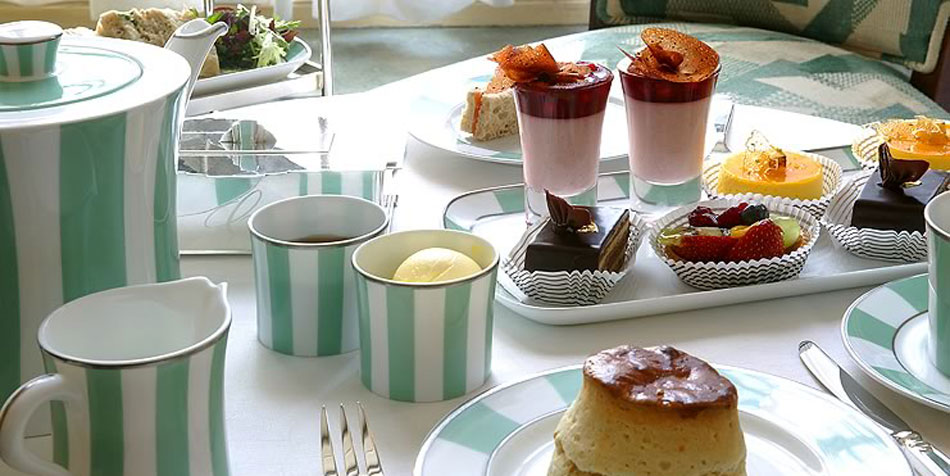
The combination of tea with dishes also requires special attention. If a guest orders dessert, you should not offer him to drink a cake with gorgeous highland Taiwanese oolong. The taste of tea and its effect will be hopelessly suppressed by such a neighborhood. Tea of this level is better to enjoy without any additions. Black tea goes well with sweets.
Many types of tea not only go well with desserts and other dishes, but are also able to emphasize their taste. Conversely, some light desserts make the taste of tea more voluminous and rich. Choose these combinations consciously.
Tea service
When choosing a tea preparation method and appropriate utensils, several factors should be considered.
Number of guests. For one person, tea can be served in a glass or cup per serving. For a large company, a volumetric kettle is more suitable.
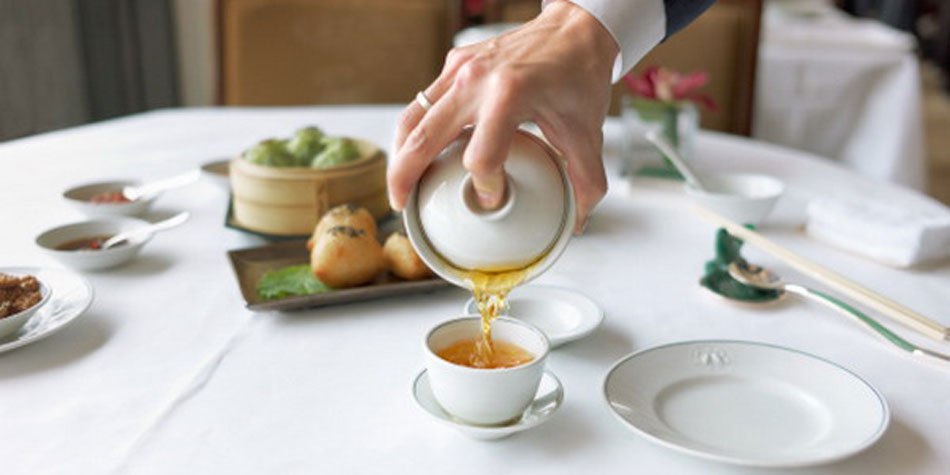
The time that the guest plans to devote to tea drinking. Have a quick cup or enjoy tea for an hour and a half? For the latter, consider a special way of serving, it is best that the tea can be brewed many times and enjoy the changes in tastes and aromas with each small cup. The guest can make tea on their own in a type (teapot with a button) or a small gaiwani.
The level of "preparation" of the guest for elite varieties of tea. As mentioned above, it is worth clarifying how familiar your guest is with Chinese tea. If he is new to the tea world - for starters it is better to offer tea that everyone will definitely like without exception.
Summary
Tea is an integral part of the menu of any self-respecting institution in the HoReCa segment. The impressive conclusion of a pleasant meal forms the guest's opinion about your establishment. Include the popular varieties of real tea in the tea card - let it be the brightest representatives from each group of white, green, red tea, the best oolongs and pueras. The ideal tea card of a high-level restaurant should be composed of pure (with a small addition of flavored), high-quality, tasty, different and memorable teas.

Colds have come, often even at home or in the office, it is not warm enough, hands and feet freeze, ..

A teapot with a button, a gunfu teapot, a teapot for the strait, a tip, a tea master - these wonderf..

Dishes for tea drinking is very different and requires careful study. Drinkers are glass, clay, porc..
In our time, the tea market is represented by many varieties of tea. The price range is very wide - ..
Recommended

Anchan is a blue tea made from Thai orchid flowers of a delightful bright blue color. Other names for this flower are Moth pea or ..
276 грн.

Kimun is a strong, black, intoxicating, fragrant breath of inspiration from fatigue and depression with a soft "smoke". Synonym..
215 грн.

Milk Oolong - home comfort in every cup! Synonyms: Nai Xiang Jin Xuan, Milk Oolong, Oolong with Milk Flavor Effect: M..
292 грн.

Da Hong Pao - the legendary Chinese Oolong tea, gathered in the mountains of Wuyi, is one of the top most expensive teas in the wo..
379 грн.

Lapsang Souchong - special smoked tea for lovers of the exotic. Synonyms: Xiao Zhong, Xiaozhong. Effect: gives comfort, ..
136 грн.

Tie Guan Yin - the famous Chinese Oolong tea with a bright aroma of blossoming lilacs gives unusual tea conditions. Synonyms: T..
179 грн.

A floral and sunny mood for the whole day, a guarantee of a romantic and sensual evening. Synonyms: Jasmine pearl, Green te..
291 грн.

A gorgeous little tip Samadoyo with a transparent lid - now you can enjoy tea from all sides! Laconic design will combine it wi..
1 450 грн.
Kimun is a strong, black, intoxicating, fragrant breath of inspiration from fatigue and depression with a soft "smoke". Synonym..
215 грн.

Warming and hugging evening tea with honey notes of dried fruit for lovers of classic black. Synonyms: Red Yunnan tea, Dian Hon..
141 грн.

Dian Hong - your inspiration and harmony with the heady aroma and rich taste! Dian Hung is autumn! Dian Hoon is a red tea that ..
163 грн.

Golden Brow - delicately curled tea leaf and golden bud. This tea is not only beautiful, it is incredibly tasty and fragrant! ..
138 грн.

Happy Raja - the taste and emotions of childhood! Indian black tea, which returns to childhood not only the taste and aroma, bu..
150 грн.

Assam is the strongest of all Indian teas. About half of the tea produced in India is grown in the Indian state of Assam. The t..
270 грн.

Ceylon black tea - the usual taste and aroma from childhood! Tea grown on the tea island itself. Sri Lanka (Ceylon) is recogniz..
210 грн.

Xiao Zhong - warm embrace of an old friend, coziness and comfort in every mouthful. Effect: warms, improves mood and well-being..
165 грн.