
Puer: Everything You Need to Know About Aging - 1, 3, 5, 10 Years

- 11 September 2025pmEurope/KievThu, 11 Sep 2025 12:04:00 +03002025pThursdaypm25
- Views: 5553
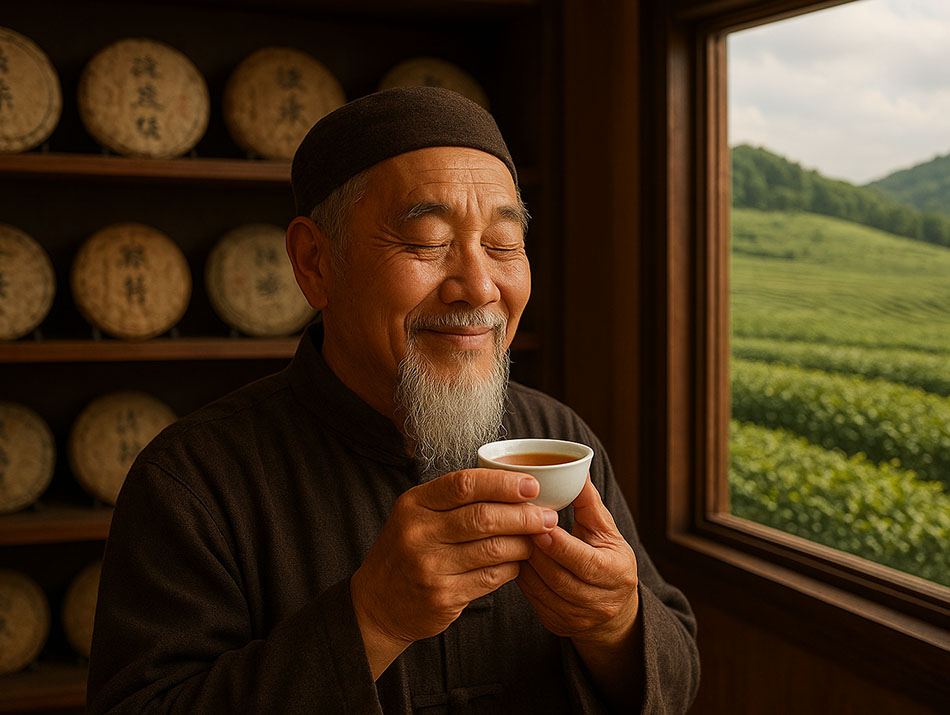
Puer: everything you need to know about aging — 1, 3, 5, 10 years
Introduction: why talk about aging puer at all?
The word "aging" is associated with fine wine, cognac, or at least cheese that was lucky enough to lie in a cellar under the right lighting. And when it comes to puer, a pattern immediately comes into play: the older, the better, more expensive and more prestigious. But it's not that simple.
Puer is a tea with character. It lives its own life and sometimes behaves unpredictably. Unlike green or black tea, which retain their taste in approximately the same state in which they were packaged, puer is capable of changing over the years. Sometimes it becomes deeper, softer, acquires new notes. And sometimes - alas - it simply turns into a sad pile of dry leaves if it was stored incorrectly.
And here it is important to understand: puer aging is not magic for the sake of magic, but a process in which the tea variety, technology, climate, and even the very cupboard where you forgot it for ten years all play a role.
Myths about puer aging
The first and most common myth: "The older the puer, the better it is." It sounds beautiful, but the truth is that each age has its pros and cons. Sometimes a three-year-old puer tastes better and is more pleasant to drink than a ten- or twenty-year-old one, because it has reached the "sweet spot" of its development.
The second myth: "Shu and sheng age the same way." No. Shu puer aging is more about smoothing out the taste than about radical changes. Sheng puer aging is like a teenager: at first sharp, with a character, but over time it can turn into a real philosopher with a soft voice.
And the third myth: "Aging guarantees quality." Alas, if the puer was initially mediocre, even a hundred years in the cellar will not make a masterpiece out of it.
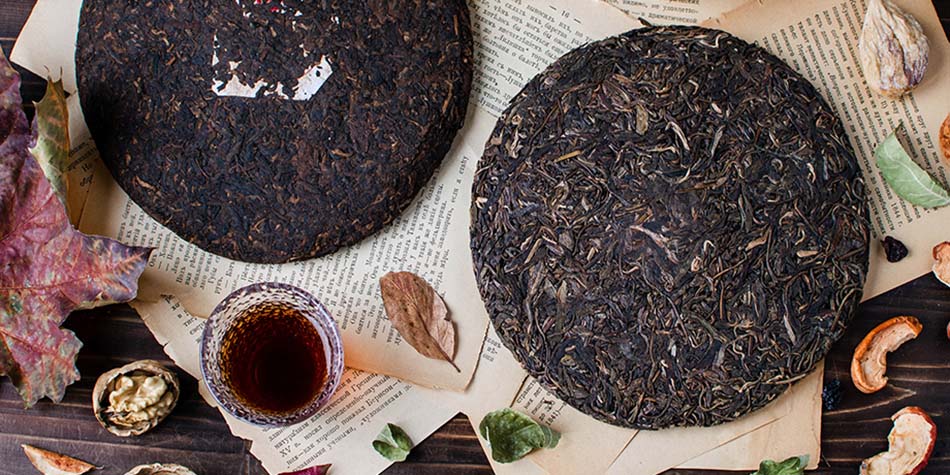
Shen vs. Shu: how puer aging works
To avoid confusion, let's dot the i's right away.
Shen (raw puer) is a preparation that continues to slowly ferment. Young sheng is sharp, tart, sometimes even "green-grassy". Over time, it softens, opens up, acquires deep woody, fruity or honey notes. With aging, sheng puer can change beyond recognition.
Shu (ready puer) has already undergone artificial fermentation. Its taste is initially softer, earthy, with notes of wood, dried fruits, nuts. With aging, shu puer becomes a little nobler, cleaner, but there will be no radical transformation, like sheng.
Simply put: sheng is dynamics, shu is stability.
How Puer is Aged in China and Around the World
Aging Puer is not just “leaving it on the shelf for years,” but a whole art.
There is a beautiful legend. If a girl was born into a Chinese family, the parents would take a cake or a brick of young, not particularly valuable, Puer and bury it in the ground. When the girl grew up and it was time to marry her off, the Puer was dug up and became a generous dowry for the bride - in 15-18 years the tea matured and acquired high value.
This is probably the reason for the widespread belief that Puer is aged in the ground. Although, there is some truth in this legend - Puer is stored in damp and high humidity conditions.
In China
Traditional aging includes several important points:
Tea cellars (仓库, “tsangku”) are wooden cabinets or special rooms with controlled humidity. Tea “breathes”, but is protected from direct light and foreign odors.
Natural fermentation - sheng is left to mature naturally; shu sometimes undergoes accelerated fermentation and only then matures.
Seasonal ventilation - tea is periodically moved so that fermentation proceeds evenly.
Neighborhood control - pu-erh easily absorbs aromas, so it is not stored near spices or strong-smelling products.
Around the world
Pu-erh lovers outside of China adapt traditional methods to their conditions:
Humidity-controlled tea cabinets and chests of drawers - allow you to maintain optimal conditions: 60-70% humidity and a stable temperature.
Cardboard boxes and paper bags - to “breathe” the tea and protect it from light.
Separate rooms for collections - to minimize the influence of foreign odors.
Checking and ventilation - every few months, the tea is slightly moved or ventilated for uniform maturation.
The main thing is that puer for the collection remains a living product, and not only the taste, but also the potential for proper aging depends on the storage conditions.
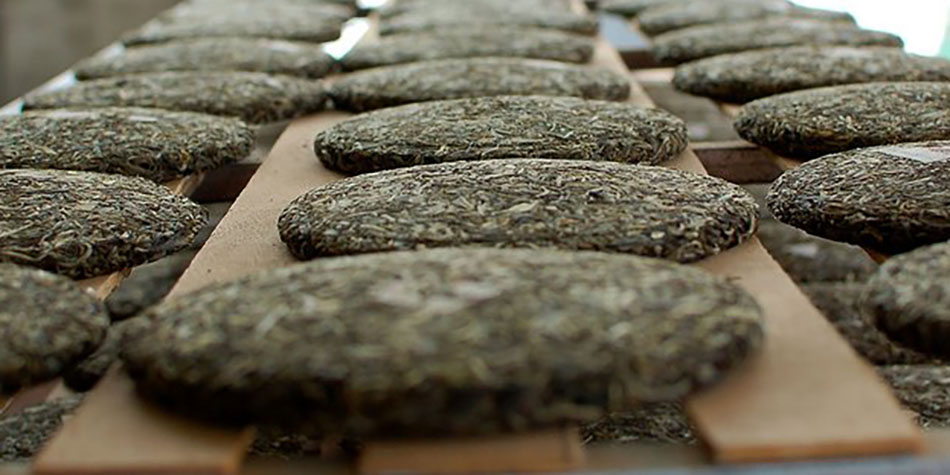
1 year old puer — sheng and shu
Shen: fresh, vigorous, sometimes too straightforward. It is often compared to green tea, only with perspective. The taste can be tart, with noticeable bitterness and “grassiness”. This tea is for lovers of bright emotions and experiments.
Shu: ready for use, soft and dark. But fresh shu sometimes gives off “dampness” or the smell of earth after rain. It’s good if you have the patience to wait a couple of years.
3 year old puer — sheng and shu
Shen: changes noticeably. Sharp grassiness goes away, balance appears, fruity or floral shades become softer. The body of the drink is denser, the taste is deeper. For many, this is the ideal age to understand “whether you like sheng at all”.
Shu: becomes cleaner. Residual “cheese” disappears"fishy" or "fishy" notes, the taste is smoothed out. At this age, 3-year-old puer is already easy and pleasant to drink.
5-year-old puer is the golden mean
Shen: that very "golden time". The tea has already matured, it becomes soft, mature, and harmonious. Freshness is preserved, but honey or woody accents are added to it. It is a pleasure to drink.
Shu: the difference with three-year-old is not so noticeable. But the taste becomes deeper, cleaner, sometimes interesting shades appear - dried fruits, nuts, wood.
Puer 10 years and older
Shen: turns into a real gem. The taste is rich, deep, with noble woody, spicy, sometimes even wine notes. But! This is provided that it is stored correctly. Otherwise, you can get a banal "old tea without taste".
Shu: becomes soft, smooth, velvety. But don't expect miracles - there is a difference between ten-year and five-year shu puer aging, but it is not as dramatic as sheng.
How to store puer so that aging is a joy
If you leave puer for beginners on the mezzanine in a bag next to a pack of vanilla and an old woolen scarf, nothing good will come of it. Tea absorbs odors, moisture, dust and the mood of the apartment.
Main rules:
Store in a dry, ventilated place (storage of puer).
Avoid direct sunlight and strong odors.
For large collections - special tea "cabinets" or at least cardboard boxes without plastic.
Do not overdry - puer must "breathe".
Conclusion
So, aging puer is not a race for numbers, but a story about taste and character.
If you want vivid impressions - take young sheng puer aging.
If you want stability and softness, young or medium aged shu puer will do.
For “thoughtful get-togethers,” a five- or ten-year-old sheng is an excellent option.
The main thing is not to believe in the fairy tale that “older always means better.” Sometimes it is a three-year-old puer that brings more pleasure than an expensive old man with a solid passport.
Puer is like a person: with age, he changes, but does not always become wiser.

We immediately apologize for the scandalous title of the article - but this is how the question aske..

Sorry for the informal vocabulary, but it is with such a request that a lot of users turn to Google...

Talk about puerh can be infinite. The point is not only that this is the most "tea", the most Chines..
Tea for weight loss - is there such a miracle? What tea really helps to lose weight? Can I lose weig..
Recommended

Wild puer is collected from wild-growing tea trees, its rich aroma of dried fruit and sweet-astringent taste will give unforgettab..
295 грн.

The king of tall trees is famous for his ability to give incredible tea fortunes! Shen Puer Qiao Mu Wang (King of Tall Trees) i..
411 грн.

Shen Puer Menghai Da Yi is a powerful energy drink from Menghai! Classic numbered sheng recipe from 1975. Made from raw materia..
400 грн.

Shu Puer Haiwan Old comrade - friendship, proven over the years! Jubilee Puerh of the Haiwan Tea Factory, released in honor of ..
198 грн.

Shu Pu-erh V93 - ten years old pu-erh brand quality! Effect: perfectly invigorates, fills with energy, relieves stress and phys..
338 грн.

Shu Puerh Menhai Da Yi Amber Tiles - a chocolate bar for your mood! Puerh was produced at the Menhai tea factory in 2017 ..
238 грн.

Kimun is a strong, black, intoxicating, fragrant breath of inspiration from fatigue and depression with a soft "smoke". Synonym..
215 грн.

Warming and hugging evening tea with honey notes of dried fruit for lovers of classic black. Synonyms: Red Yunnan tea, Dian Hon..
141 грн.

Dian Hong - your inspiration and harmony with the heady aroma and rich taste! Dian Hung is autumn! Dian Hoon is a red tea that ..
163 грн.

Golden Brow - delicately curled tea leaf and golden bud. This tea is not only beautiful, it is incredibly tasty and fragrant! ..
138 грн.

Happy Raja - the taste and emotions of childhood! Indian black tea, which returns to childhood not only the taste and aroma, bu..
150 грн.

Assam is the strongest of all Indian teas. About half of the tea produced in India is grown in the Indian state of Assam. The t..
270 грн.

Ceylon black tea - the usual taste and aroma from childhood! Tea grown on the tea island itself. Sri Lanka (Ceylon) is recogniz..
210 грн.

Xiao Zhong - warm embrace of an old friend, coziness and comfort in every mouthful. Effect: warms, improves mood and well-being..
165 грн.