
How to brew tea in gaiwan?


- 31 March 2021pmEurope/KievWed, 31 Mar 2021 15:08:28 +03002021pWednesdaypm21
- Views: 9663

Gaiwan is the most traditional dish for brewing Chinese tea. Who and when invented it is already difficult to find out, but usually its appearance is associated with the transition from pressed tea to loose tea - this happened at the beginning of the Ming era, in the XIV-XV centuries.
What is Gaiwan?
Gaiwan is translated as "a cup with a lid" (wan - a cup, gai, gaizi - a lid).
Initially, gaiwan was used not only for brewing tea, but also directly for drinking. That is, the bowl served both as a teapot and a bowl.
Gaiwan is a round bowl with a lid expanding towards the top. The lid is usually smaller than the diameter of the bowl and is recessed inward rather than resting on top. This allows it to move freely, adjusting the drain speed if necessary. On top of the lid, there is a button - a cap, which also expands to the top and repeats the shape of the bowl.
The classic gaiwan is also equipped with a saucer - a stand - it fixes the gaiwan, preventing it from sliding and protecting the surface of the table from smudges.
The volume of gaiwan usually ranges from 100 to 280 ml. But there are also rare exceptions.

Gaiwan is versatile and can be used to brew all types of tea.
But, given the wide neck and the properties of porcelain to give off heat rather quickly, gaiwan is more often used for brewing low-fermented tea.
Bowl of the Three Foundations
The poetic name is gaiwan. The Chinese are very fond of seeing symbolism in everything. Three foundations - Earth, Man and Sky. In this trinity, the role of the earth is played by a saucer (earthly, material), the lid is heaven (the sublime, spiritual), and the bowl in which the brewing process takes place is a person. Thus, a person reaches heavenly heights through tea.
Apart from allegories and symbolism, each part of the gaiwani has specific functions.

Cap
- Serves as a filter, preventing tea leaves from entering the mouth or chahai
- Serves as a regulator of the draining speed - by making the gap between the lid and the bowl wider, you can speed up the draining
- The lid can be used to stir and turn the tea leaves, enriching the infusion with oxygen and controlling the brewing process
- The aroma of tea is retained on the lid, do not miss the extra tea pleasure - the aroma on the inside of the lid is different from the aroma in the bowl
Saucer
- Regulates temperature, allows you to keep warm
- Collect spilling flask
- A tea leaf is folded in a saucer after drinking tea for detailed study

Bowl
- Serves as a brewing vessel
- Can be used as a bowl
How to make tea in gaiwan
There are two ways to brew tea in gaiwan - infusion and pouring.
Infusion
The easiest way. Put 2-3 grams of dry tea in a heated gaiwan, fill it with water, wait 2-3 minutes and you can drink directly from the gaiwan by slightly sliding the lid. Or pour it into a bowl, if it's unusual to drink this way.
Strait
Gaiwan tea brewing is a spill brewing. That is, the water spills the tea leaf, almost without lingering on it. Thus, many brews are obtained, the tea in each strait is revealed in a new way, showing the most varied nuances of taste and aroma.
This method is sometimes called Ping Cha - tea tasting.
Of course, such a tea party will take time - at least half an hour. Find it to get real tea pleasure.

You will need:
- Gaiwan
- Chahai (serves as an intermediate container between gaiwan and bowls
- Sieve (optional, but desirable)
- Soft water at the right temperature
- And, of course, delicious tea and good mood :-)
Brewing method in classic gaiwan

- Heat the water to the temperature required for this type of tea
- Rinse the dishes
- Take 5-7 grams of tea per gaiwan. If you do not have tea scales - do not be upset, gradually you will learn how to measure the required weight with a spoon. Remember that tea has different densities. For example, 5 grams of tightly rolled Ginseng tea will only cover the bottom of a gaiwan, while loose Silver Needle tea can take up 2/3 of its volume.

- Place the tea in the gaiwan, cover with water, cover. Sliding the lid a little to the side, drain the tea literally right away, do not insist. The first brew is not drunk, it awakens the tea and allows you to achieve purity of taste.
- Brew the tea again. Grasp the edges of the gaiwan with your thumb and middle finger. Hold the lid with your index finger, sliding it slightly towards the palm, so that the trickle is directed in the middle between the thumb and forefinger. Pour into chahai through a sieve. In the chakhay, tea will even out in taste and aroma, moreover, it is more convenient to pour tea into bowls from the chahai.
- Pour the tea into bowls and enjoy.
- Repeat brewing. A good tea is resistant to the number of infusions and can please you with 10 - 15 infusions.
- At the end of the tea, indulge in the pleasure of examining in detail the beauty of the tea leaf after brewing and enjoying the aroma on the lid and in an empty bowl.
Other ways to capture gaiwan

Two hands (Bell)
Too large gaiwan is difficult to grip with one hand. With the thumbs of both hands, we fix the position of the lid, and with the middle and index fingers of both hands we grasp the saucer. We tilt the gaiwan towards ourselves to pour the tea into the chahai.
This grip method is also good for graceful girls with miniature hands.
How not to get burned while brewing tea in gaiwan?
The most common reason for burns is that you took too hot water.
Gaiwan is rarely used to brew highly fermented tea. The temperature of water for brewing tea in gaiwan usually does not exceed 80 degrees, it is impossible to burn yourself with such water.
But if you nevertheless decide to brew tea in a gaiwan that requires 100-degree water for brewing, stick to a simple rule: with your thumb and middle finger, hold the gaiwan by the very edges, and not in the middle. The edges deliberately diverge outward and are never too hot.
Summary
Making tea in a gaiwan is not that difficult, following our simple recommendations. Take your time, get used to the correct dishes and get the maximum benefit and pleasure from your tea!
Delicious unforgettable teas with i-tea.club!

Dishes for tea drinking is very different and requires careful study. Drinkers are glass, clay, porc..

A teapot with a button, a gunfu teapot, a teapot for the strait, a tip, a tea master - these wonderf..

How to brew puer?If you are new to tea making or do not have time for a long tea party - puer can be..

Green Chinese tea is a matter of admiration and debate. Its gentle sweet taste and aroma captivates..
Recommended

Elegant, festive gaiwan for bright tea states! Volume 170 ml Origin: Jingdezhen Type of painting: San - Tsai. Gaiwan m..
720 грн.

Chic gaiwan with a cosmic pattern - for cosmic tea states! Volume: 200 ml Origin: Dehua Gaiwan is covered with Tian Mu (H..
735 грн.
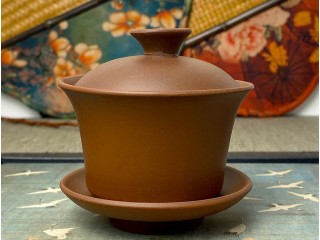
Clay Gaiwan — elegant teaware in Chinese style This gaiwan is made of clay and complemented by a convenient saucer, which ..
360 грн.

A versatile porcelain gaiwan with a bamboo pattern. Elegant, harmoniously combined with many bowls. Volume 290 ml Origin:..
1 005 грн.

Blue Porcelain Gaiwan Floral Volume 180 ml Origin: Dehua The walls of the gaiwan are of medium thickness, glowing in the ..
735 грн.

Gaiwan porcelain with hieroglyphs Volume 180 ml Origin: Jingdezhen Jingdezhen (Jiangxi Province, China) is called the cer..
525 грн.

Kimun is a strong, black, intoxicating, fragrant breath of inspiration from fatigue and depression with a soft "smoke". Synonym..
215 грн.

Warming and hugging evening tea with honey notes of dried fruit for lovers of classic black. Synonyms: Red Yunnan tea, Dian Hon..
141 грн.

Dian Hong - your inspiration and harmony with the heady aroma and rich taste! Dian Hung is autumn! Dian Hoon is a red tea that ..
163 грн.

Golden Brow - delicately curled tea leaf and golden bud. This tea is not only beautiful, it is incredibly tasty and fragrant! ..
138 грн.

Happy Raja - the taste and emotions of childhood! Indian black tea, which returns to childhood not only the taste and aroma, bu..
150 грн.

Assam is the strongest of all Indian teas. About half of the tea produced in India is grown in the Indian state of Assam. The t..
270 грн.

Ceylon black tea - the usual taste and aroma from childhood! Tea grown on the tea island itself. Sri Lanka (Ceylon) is recogniz..
210 грн.

Xiao Zhong - warm embrace of an old friend, coziness and comfort in every mouthful. Effect: warms, improves mood and well-being..
165 грн.